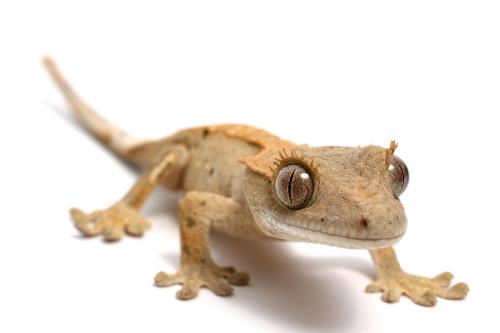
Draco lizards (flying), tokay geckos, water monitors
Europe
Wall lizards, slow worms (legless), geckos
Diet: Mostly insectivorous (ants, beetles, crickets, spiders). Larger species eat small mammals, birds, eggs, other lizards, and even carrion (Komodo dragon eats deer and water buffalo)
Behavior: Most are diurnal (active by day). Many are territorial – males display push-ups, head-bobbing, and dewlap extensions (iguanas)
Defense mechanisms:
Tail autotomy: Shedding tail to distract predators (regrows later)
Camouflage: Color-changing (chameleons, anoles)
Venom (Gila monster, beaded lizard – rare)
Inflation (thorny devil, frilled-neck lizard)
Special adaptations:
Flying lizards (Draco): Glide using rib-supported wing-like flaps
Geckos: Sticky toe pads (millions of microscopic hairs) to climb smooth surfaces and even walk upside down on glass
Chameleons: Independently moving eyes, lightning-fast tongue (longer than body) to catch insects
Horned lizards: Shoot blood from their eyes to confuse predators
Reproduction: Most lay eggs (oviparous), some give live birth (viviparous – common in cold climates). Some species reproduce parthenogenetically (all-female, no males needed)
Lifespan: 2–10 years (small species) | 10–30 years (large species) | Komodo dragon up to 30 years
Largest species: Komodo dragon (3 m / 10 ft, 70 kg / 150 lbs)
Smallest species: Dwarf gecko (1.6 cm / 0.6 in, 0.1 grams)
Conservation status: Many species are threatened by habitat loss, invasive species, and pet trade
Status
Examples
Critically Endangered
St. Croix ground lizard, Utila iguana
Endangered
Galápagos pink land iguana, Fiji crested iguana
Vulnerable
Komodo dragon, various chameleons
Least Concern
Most geckos, anoles, skinks
Biggest threats: Habitat destruction (deforestation for palm oil, agriculture), illegal pet trade, climate change (affects egg incubation temperature that determines sex in many species), invasive predators (cats, rats eating eggs and young)
Fun fact 1: A group of lizards is called a “lounge” or “lounge of lizards.”
Fun fact 2: The Komodo dragon has venom glands (discovered in 2009) – not just bacteria in its mouth as previously believed.
Fun fact 3: Geckos can cling to surfaces because of van der Waals forces – millions of microscopic hair-like structures (setae) that create molecular attraction.
Fun fact 4: The thorny devil (Australia) collects water on its spiky body and channels it to its mouth using capillary action.
Fun fact 5: Several lizard species are parthenogenetic (all-female). The New Mexico whiptail reproduces entirely without males.
Fun fact 6: The green basilisk lizard runs on water – called the “Jesus Christ lizard” – for up to 5 meters (15 feet) before sinking.
Fun fact 7: Some lizards can live without food for months (slow metabolism). Gila monsters store fat in their tails.
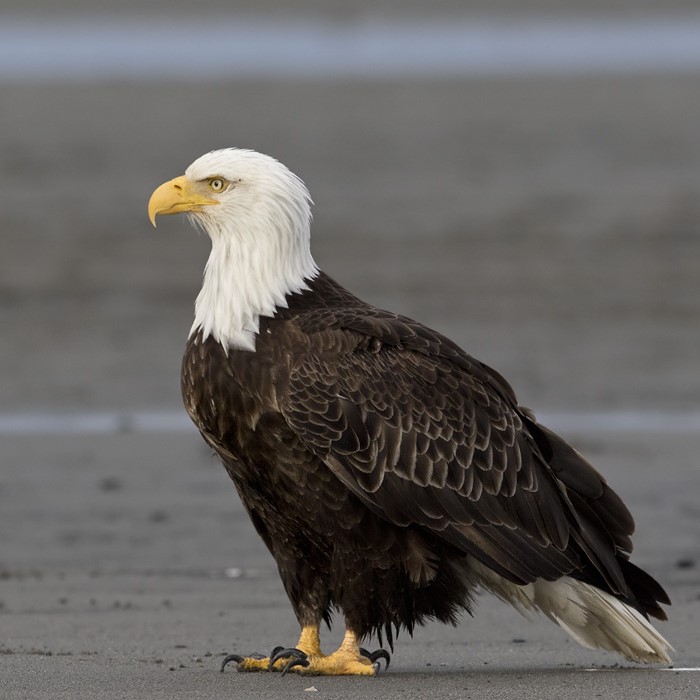
Scientific name: Family Accipitridae (over 60 species). Includes golden eagles, bald eagles, harpy eagles, sea eagles, and more.
Size: Varies widely – from 0.5 kg (1 lb) to 7 kg (15 lbs). Wingspan from 1 meter (3 ft) up to 2.5 meters (8 feet) for the Steller’s sea eagle.
Appearance: Large, powerful birds with hooked beaks, strong talons, broad wings, and often a white head or tail (bald eagle). Excellent eyesight.
Habitat: Found on every continent except Antarctica – mountains, forests, grasslands, deserts, coastlines, lakeshores, and open country.
Where found: Worldwide:
North America: Bald eagle, golden eagle
South & Central America: Harpy eagle, crested eagle
Africa: Martial eagle, African fish eagle
Europe & Asia: Golden eagle, white-tailed eagle, steppe eagle
Australia: Wedge-tailed eagle
Diet:Apex predators – mainly fish, mammals (rabbits, monkeys, small deer), birds, reptiles, and carrion. Some are specialists (fish eagles eat mostly fish; harpy eagles eat monkeys and sloths).
Hunting style: Soars high, spots prey with incredible vision (8x sharper than humans), then dives at 160–320 km/h (100–200 mph) to snatch with powerful talons.
Talons and grip: A harpy eagle’s talons are as long as bear claws (13 cm / 5 inches). Grip strength over 400 psi – can crush a monkey’s skull.
Nests: Build the largest nests of any bird – some weigh over 2 tons (4,400 lbs) and are 2.5 meters (8 feet) across. Used for decades.
Lifespan: 15–30 years in wild | Up to 50 years in captivity.
Conservation status: Varies by species.
Species
Status
Bald eagle
Least Concern (recovered – success story)
Golden eagle
Least Concern
Harpy eagle
Near Threatened
Philippine eagle
Critically Endangered (fewer than 500 left)
Steller’s sea eagle
Vulnerable
Biggest threats: Habitat loss, poaching, pesticides (DDT nearly wiped out bald eagles), electrocution on power lines, lead poisoning (from eating bullet-ridden prey).
Fun fact 1: A group of eagles is called a “convocation,” “aerie,” or “soar.”
Fun fact 2: Bald eagles are not actually bald – “balde” is an old English word meaning “white-headed.”
Fun fact 3: An eagle’s eyesight is so sharp it can spot a rabbit from 3 kilometers (2 miles) away.
Fun fact 4: The Philippine eagle is the largest eagle by length (1 meter / 3 feet tall). The harpy eagle is the heaviest and most powerful.
Symbolism: The bald eagle is the national bird of the United States. Eagles appear on flags and emblems of many countries (Germany, Egypt, Mexico, Poland, etc.).
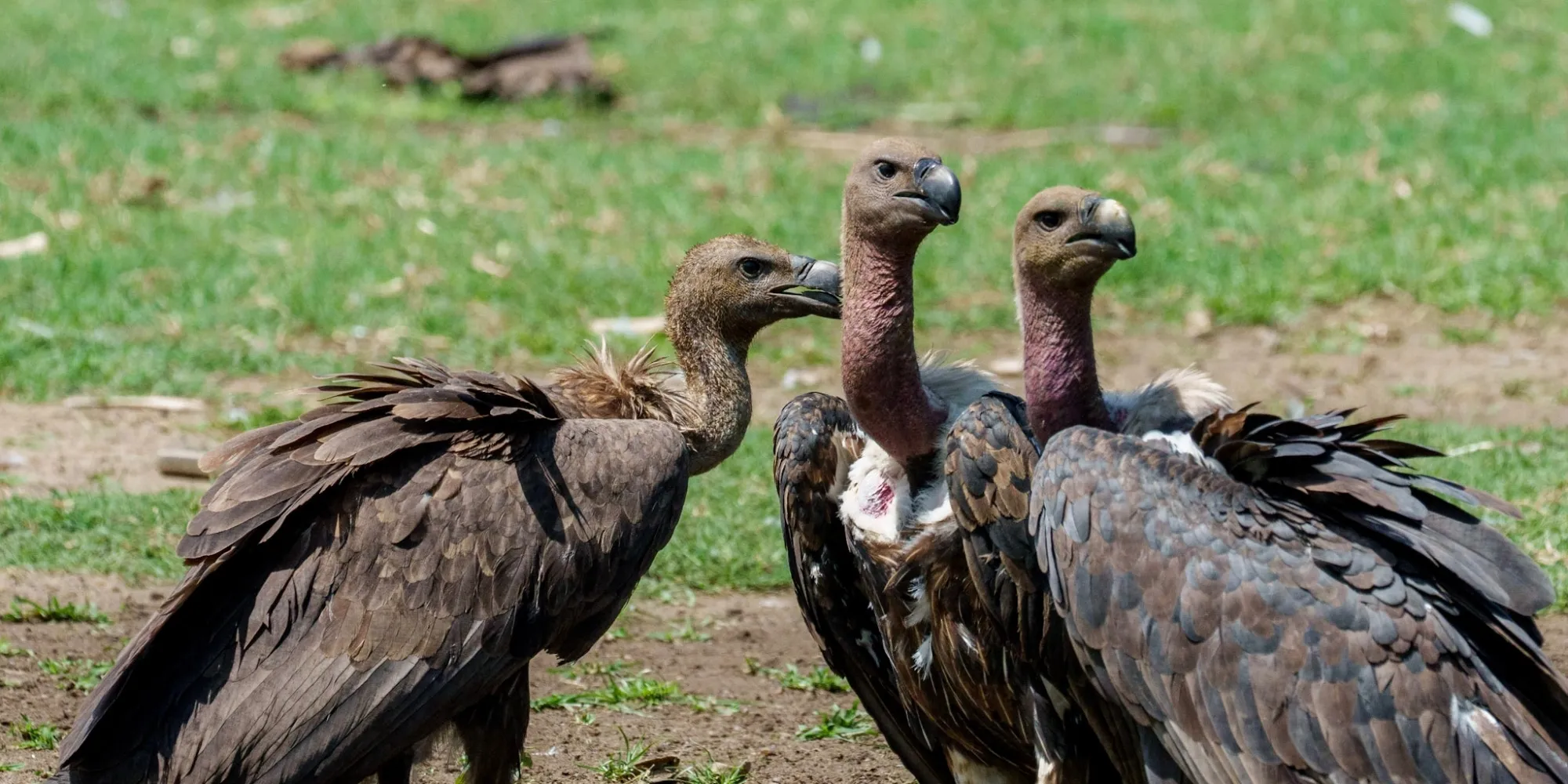
Scientific name: Two groups – Accipitridae (Old World vultures, 16 species) and Cathartidae (New World vultures, 7 species)
Size: Varies greatly – from 0.8 kg (1.8 lbs) to 12 kg (26 lbs). Wingspan up to 3 meters (10 feet) for the cinereous vulture
Appearance: Mostly bald heads and necks (prevents feathers from getting bloody), hooked beaks, broad wings, dark plumage (some have bright red, yellow, or orange heads)
Habitat: All continents except Australia and Antarctica – open country, grasslands, savannas, deserts, mountains, forests, and near human settlements
Where found:Old World vultures – Africa, Europe, Asia. New World vultures – North, Central, and South America
Diet:Strictly carrion (dead animals) – they are nature’s cleanup crew. Eat rotting flesh, bones, and carcasses
Behavior: Highly social (feed in flocks, roost together, nest in colonies). Soaring fliers – can stay in the air for hours without flapping
Special skills: Incredible eyesight (Old World) or amazing sense of smell (New World – especially turkey vultures, which can smell a dead animal from 1.6 km / 1 mile away)
Digestion: Extremely strong stomach acid (pH near 0) that kills anthrax, rabies, botulism, and cholera bacteria. They can safely eat diseased carcasses
Speed: Can fly 60–80 km/h (37–50 mph) while soaring
Lifespan: 10–30 years in wild | Up to 50 years in captivity
Conservation status:Critically endangered (many species). Vultures are among the most threatened birds on Earth
Species
Status
Indian vulture, Red-headed vulture, White-rumped vulture
Critically Endangered
Himalayan griffon
Near Threatened
Turkey vulture, Black vulture
Least Concern
Biggest threats: Poisoning (from veterinary drug diclofenac – killed 99% of some Asian vulture species), electrocution from power lines, poisoning by poachers (to hide animal carcasses), habitat loss
Fun fact 1: A flock of vultures is called a “wake” or a “committee.”
Fun fact 2: They urinate on their own legs to cool down (uric acid also kills bacteria from carcasses).
Fun fact 3: Vultures rarely attack live animals – they have weak feet and cannot carry prey like eagles.
Ecological role:Essential cleaners – they remove rotting carcasses from the environment, preventing the spread of diseases like rabies and anthrax. Without vultures, feral dogs and rats take over (spreading disease to humans).
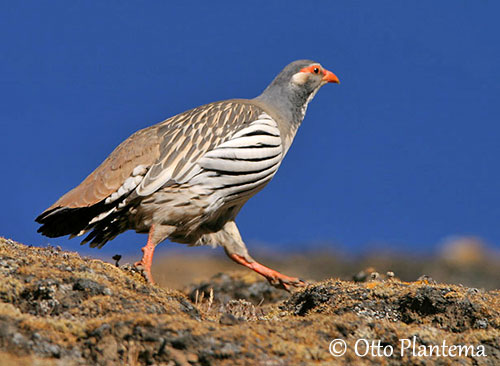
Scientific name:Tetraogallus (genus with 5 species)
Size: 50–65 cm (20–26 inches) | Weighs over 2 kg (4.4 lbs)
Appearance: Large, bulky grey-brown bird with black spots, striking white belly and under-tail (visible in flight). Males and females look similar.
Habitat: The highest-living bird on Earth – rocky mountain slopes between 3,000–6,000 meters (up to 19,700 feet). In summer, found as high as 8,000 meters (26,200 feet).
Where found: High mountains of southern Eurasia – Caucasus, Himalayas, Tibetan Plateau, Altai Mountains, and western China.
Five species: Himalayan, Tibetan, Altai, Caucasian, and Caspian snowcock.
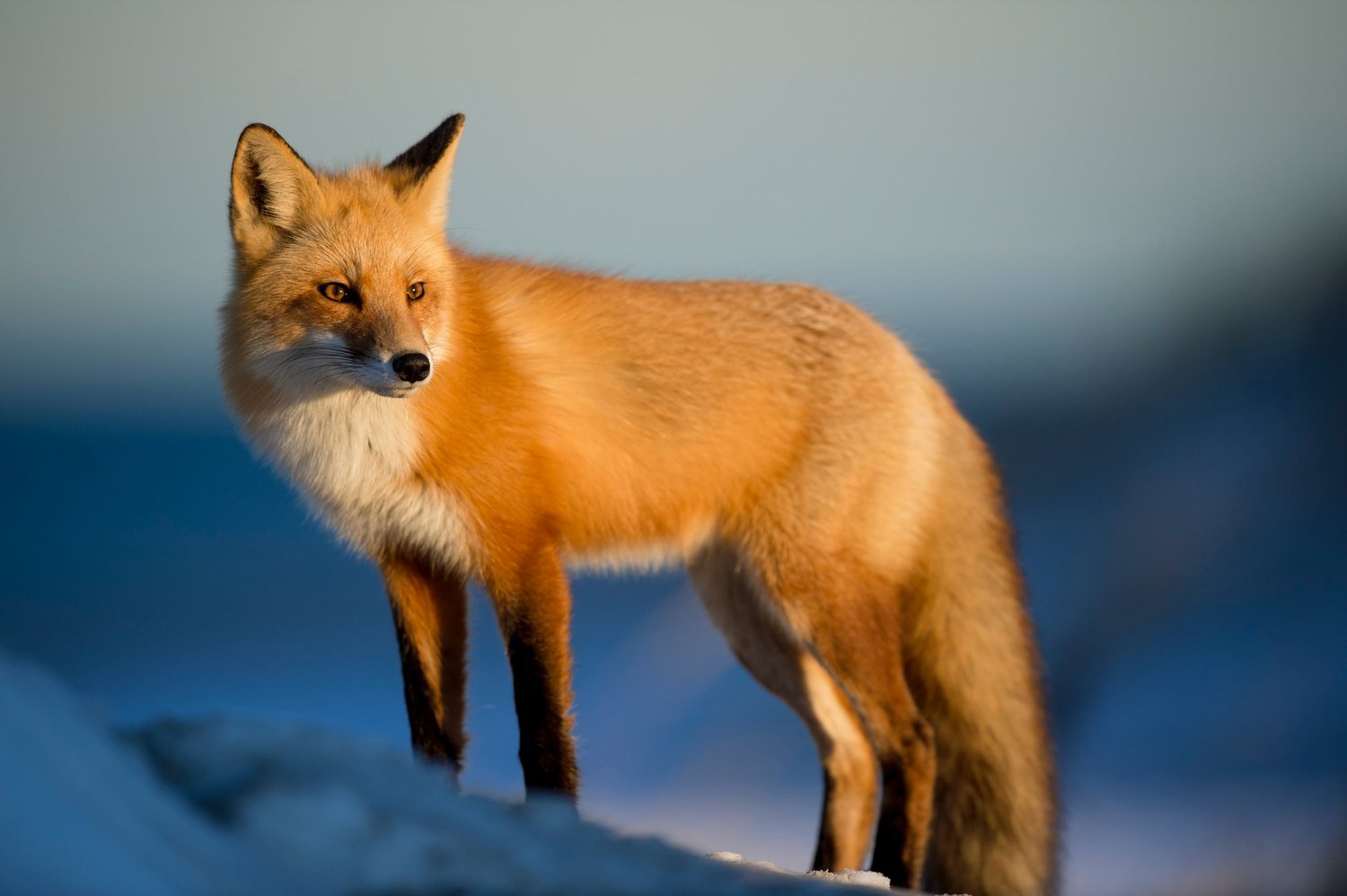
The red fox (Vulpes vulpes) is the largest and most widespread of all true foxes. Known for its intelligence, adaptability, and fiery red coat, it is one of the most successful and widespread carnivores on Earth.
Appearance
Weight: 3–14 kg (7–31 lbs). Males slightly larger than females.
Length: 45–90 cm (18–35 inches) plus a long, bushy tail (30–55 cm / 12–22 inches).
Shoulder height: 35–50 cm (14–20 inches).
Coat: Distinctive reddish-orange fur on back, sides, and head. White underparts (chin, chest, belly) and a white-tipped tail. Black “stockings” (lower legs and paws) and black-tipped ears.
Key features:
Very long, bushy tail (called a “brush”)
Slender, long-legged body
Pointed, triangular ears that stand upright
Narrow, pointed snout
Vertical pupils (like a cat) – excellent for seeing in dim light
Color variations: Silver fox (black with white-tipped fur), cross fox (reddish with a dark cross on shoulders), and albino forms exist but are rare.
Habitat
The most adaptable wild carnivore on Earth. Found in almost every habitat:
Forests (temperate, boreal, deciduous)
Grasslands and prairies
Deserts and semi-deserts
Mountains (up to 4,500 meters / 14,800 feet)
Tundra (arctic edge)
Farmlands and rural areas
Suburbs and cities (thrives alongside humans)
Where Usually Found?
The red fox has the largest natural range of any land carnivore (excluding humans). Found across the entire Northern Hemisphere.
Region
Status
North America
Throughout Canada, Alaska, and most of the continental USA (except some parts of Texas and the Southwest)
Europe
Widespread across all of Europe (except Iceland and parts of Scandinavia)
Asia
Throughout Russia, China, Japan, Korea, Central Asia, India (Himalayan region), Middle East
North Africa
Northern Africa (Morocco, Algeria, Tunisia, Libya, Egypt)
Australia
Introduced (1850s for sport) – now invasive and widespread
Arctic
Reaches the edge of the Arctic tundra (overlaps with Arctic fox in some areas)
Not found in: Iceland, most Arctic islands, Antarctica, South America, most of Southeast Asia.
Behavior & Diet
Omnivore: One of the least picky eaters in the animal kingdom.
Small mammals: Mice, voles, rats, rabbits (primary prey)
Birds and eggs
Insects: Grasshoppers, beetles, caterpillars
Fruits and berries: Apples, blueberries, blackberries, grapes
Carrion (dead animals)
Garbage (near human settlements)
Pet food left outside
Solitary hunter: Hunts alone, mostly at night (nocturnal) or during dawn/dusk (crepuscular).
Hunting technique: Uses excellent hearing (can hear a mouse squeak under 3 feet of snow). Stalks, then pounces high into the air (called “mousing”) to land on prey.
Not a pack animal: Lives in small family groups (a mated pair and their current young). But hunts alone.
Vocalizations: Over 20 different sounds, including barks, screams, howls, and a friendly “greeting” wiggle.
The Famous Tail (“Brush”)
Makes up nearly one-third of total body length
Used for:
Balance while running and jumping
Warmth (wraps around nose and paws while sleeping)
Communication (tail position signals mood)
Steering during high-speed chases
Interesting Facts
Not a dog or cat? Foxes are canids (dog family) but share many cat-like traits: vertical pupils, retractable claws (partially), whiskers on legs, and a stealthy stalking style.
Incredible hearing: A red fox can hear a mouse squeak from 30 meters (100 feet) away and can locate the exact spot of a digging rodent under deep snow.
The “pounce”: Foxes use Earth’s magnetic field to hunt. They tend to jump in a northeasterly direction when pouncing on prey, regardless of wind or sun.
City dwellers: Urban foxes are thriving in London (over 10,000), Tokyo, Berlin, and many other cities. They learn to cross streets at crosswalks and know which garbage bins are easiest to open.
“Sly as a fox”: Foxes are extremely smart. They have been observed playing dead to attract scavenging birds, then catching them. They also “cache” (hide) extra food for later.
Father of the year: Male red foxes are excellent fathers. They bring food to the female while she nurses the pups and continue feeding the family after the pups emerge from the den.
Not always red: About 10% of red foxes have a “cross” pattern (dark back with a cross on shoulders). Silver foxes (black with white-tipped hairs) were prized by fur traders and helped found the domesticated fox experiment.
Domestication experiment: In a famous 60-year Russian experiment, scientists bred silver foxes for tameness. Today, those foxes behave like friendly, floppy-eared dogs – proof that foxes can be domesticated.
Speed: Can sprint at 50 km/h (30 mph) for short distances.
Lifespan: 2–5 years in the wild (10–12 years in captivity). Most wild foxes die young – killed by cars, predators (coyotes, wolves, eagles), or starvation.
Reproduction
Mating: January–February (once per year)
Gestation: 49–58 days (about 8 weeks)
Litter size: 4–6 pups (called “kits” or “cubs”)
Born: March–April. Born blind, deaf, and toothless. Weigh only 100 grams (3.5 ounces).
Den: Usually a renovated woodchuck or rabbit burrow. Sometimes under sheds or porches in cities.
Independence: Young leave the den at 4–5 months. Females stay near mother; males disperse farther.
Predators
Wolf, coyote, bobcat, lynx, cougar, golden eagle, great horned owl
Humans (trapping for fur, hunting, vehicle collisions)
Conservation Status
Least Concern (IUCN) – population is stable and widespread.
Global population: Unknown but likely in the millions (probably 7–10 million+)
North America: Estimated 2–3 million
Europe: Estimated 1–2 million
Australia: Millions (invasive pest)
Threats:
Vehicle collisions (leading cause of death in urban areas)
Mange (parasitic skin disease caused by mites)
Trapping and hunting for fur
Rabies outbreaks (in some regions)
In Australia: The red fox is classified as invasive and a serious pest. It was introduced for fox hunting in the 1850s and has caused the extinction or decline of native ground-nesting birds, small marsupials, and reptiles. Australia spends millions controlling fox populations.
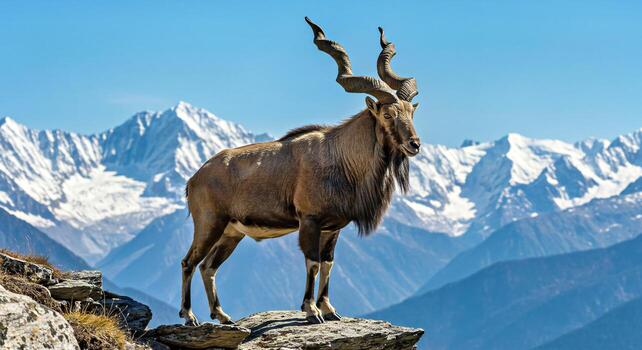
The markhor (Capra falconeri) is the largest species of wild goat in the world. It is famous for its incredible spiraling, corkscrew-like horns. The name “markhor” comes from the Persian word markhar, meaning “curly” or “snake-eater” – based on an ancient belief that these goats would kill and eat snakes .
The markhor is the national animal of Pakistan .
Appearance
Weight: Males 80–110 kg (176–242 lbs) | Females 32–50 kg (70–110 lbs)
Length: 132–186 cm (52–73 inches)
Shoulder height: 65–115 cm (26–45 inches) – tallest among wild goats
Coat: Short and reddish-brown in summer; long, thick, and grayish in winter. Males have a long beard and a heavy fringe of hair on the throat and chest (females have smaller fringes) .
The Horns: Both sexes have tightly curled, corkscrew-like horns that twist outward. Males can grow horns up to 160 cm (63 inches) long – that’s longer than most adult humans are tall! Female horns are much smaller (up to 25 cm / 10 inches) .
Habitat
Adapted to steep, rugged mountainous terrain between 600 and 3,600 meters (2,000–11,800 feet) elevation . Prefers open woodlands and shrub forests of oaks, pines, and junipers.
Where Usually Found?
Found across Central and South Asia in scattered populations :
Region
Countries
South Asia
Pakistan (largest population), India (Jammu & Kashmir), Afghanistan
Central Asia
Tajikistan, Uzbekistan, Turkmenistan
Three recognized subspecies :
Flare-horned markhor (C. f. falconeri) – Afghanistan, Pakistan, India
Bukharan markhor (C. f. heptneri) – Tajikistan, Uzbekistan, Turkmenistan, Afghanistan
Straight-horned markhor (C. f. megaceros) – Afghanistan, Pakistan
Behavior & Diet
Diurnal: Most active in early morning and late afternoon .
Herbivore: Grazes on grasses in spring/summer; browses on leaves, twigs, and shrubs in winter. Often stands on hind legs to reach high branches .
Social structure: Females live in small herds of 8–9 individuals with their young. Adult males are largely solitary .
Mating season (rut): Winter. Males fight by lunging, locking horns, and trying to push each other off balance – a dramatic sight .
Reproduction
Gestation: 135–170 days (5–6 months)
Offspring: 1–2 kids, rarely 3 (born April–June)
Weaning: 5–6 months
Lifespan: 12–13 years in the wild
Predators
Main predators include snow leopards, wolves, lynx, and brown bears. Golden eagles may prey on young kids .
Interesting Facts
National symbol: The markhor is the national animal of Pakistan and appears on the logo of Pakistan’s Inter-Services Intelligence (ISI) .
Massive horns: A male’s horns can weigh nearly one-third of its total body weight – a huge investment in attracting mates .
Snake-killer myth: Ancient peoples believed markhors actively killed and ate snakes. This likely came from the “snake-like” twisting shape of their horns .
Excellent senses: Markhors have keen eyesight and a strong sense of smell to detect predators from far away .
Seasonal movers: They perform short vertical migrations – moving to lower elevations in winter to escape deep snow .
Alarm call: Their warning call sounds exactly like the bleating of a domestic goat .
Ancestor of domestic goats? Some scientists believe the markhor may be an ancestor of certain domestic goat breeds, including the Angora goat .
Conservation Status
Near Threatened (IUCN) – population increasing but still vulnerable .
Global population: Approximately 9,700–10,500 individuals
Historic decline: Once near extinction due to hunting, habitat loss, and competition with livestock
Success story: Conservation efforts (including the USFWS program in Pakistan) brought the species back from fewer than 200 animals to over 3,500 in some regions .
Main threats: Poaching (for meat and trophy horns), habitat destruction, and armed conflict in parts of its range .
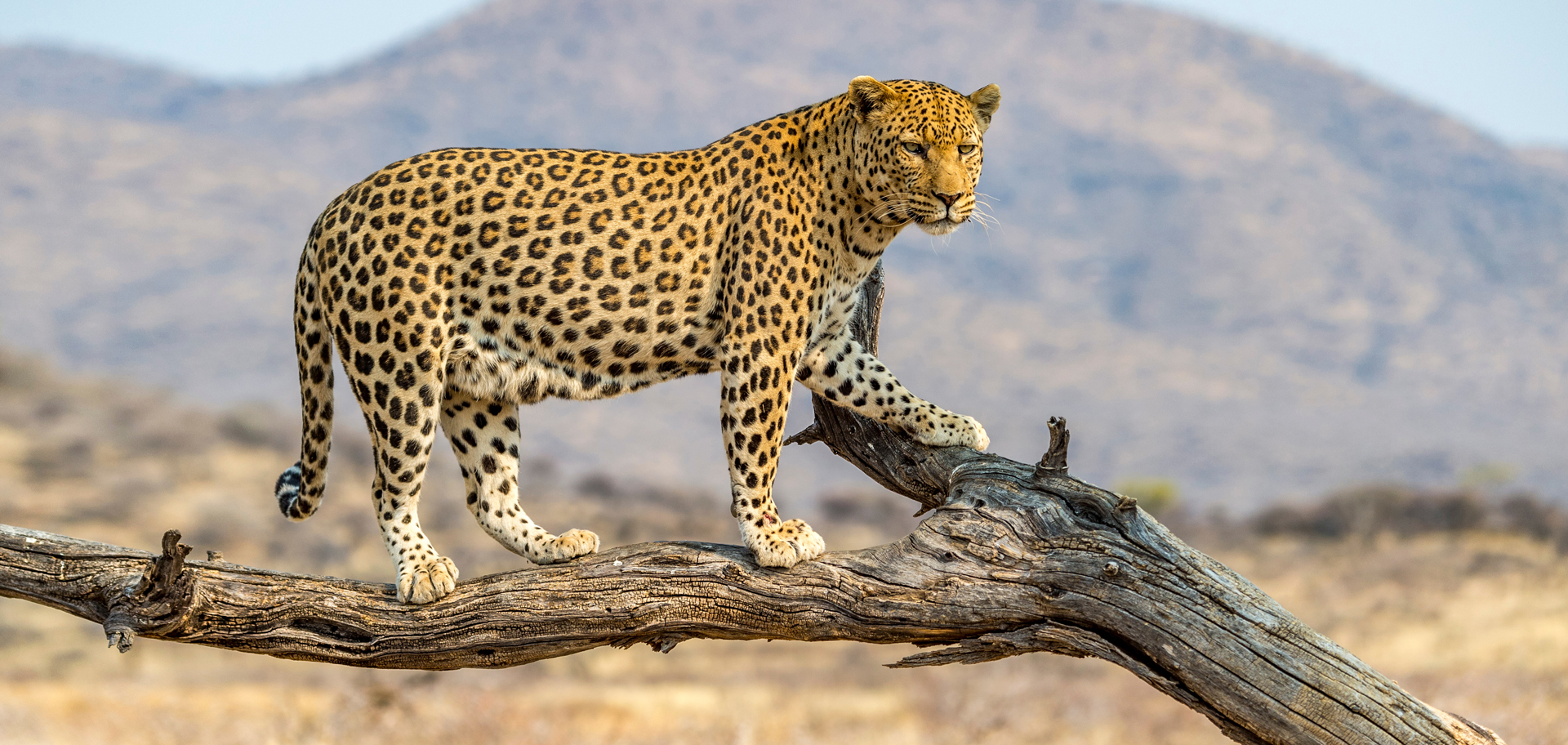
The leopard (Panthera pardus) is one of the five “big cats” in the genus Panthera (along with lions, tigers, jaguars, and snow leopards). It is famous for its strength, stealth, and ability to thrive in almost any environment.
Appearance
Weight: 30–90 kg (66–198 lbs). Males are larger than females.
Length: 90–190 cm (35–75 inches) plus a 60–100 cm (24–40 inch) tail.
Shoulder height: 45–80 cm (18–31 inches).
Coat: Golden-yellow to pale cream with black rosettes (broken circles with a darker center). Rosettes are unique to each leopard, like a fingerprint.
Key features:
Long, muscular body with short, powerful legs
Broad head with strong jaws
Large, rounded ears
Very long tail (used for balance while climbing)
Melanistic (black) form: Commonly called the “black panther” (same species, just extra dark pigment – spots still visible in good light).
Habitat
Extremely adaptable. Found in more habitats than any other big cat:
Rainforests and jungles
Savannas and grasslands
Deserts (including the Sahara)
Mountains (up to 5,000 meters / 16,400 feet)
Scrublands and rocky outcrops
Even near cities and villages
Where Usually Found?
Leopards have the largest range of any wild cat (after domestic cats). Found across Africa and Asia.
Region
Countries / Areas
Africa
Widespread throughout sub-Saharan Africa (rare in North Africa)
South Asia
India, Nepal, Bhutan, Bangladesh, Sri Lanka, Pakistan
Southeast Asia
Myanmar, Thailand, Malaysia, Indonesia (Java), Cambodia, Laos, Vietnam
East Asia
China (rare), far eastern Russia (very rare)
Middle East
Iran, Oman, Yemen, Saudi Arabia (very rare)
Extinct from: Most of North Africa, the Arabian Peninsula (except tiny pockets), the Middle East (except Iran), and most of China and Southeast Asia (drastically reduced).
Behavior & Diet
Solitary hunter: Lives and hunts alone. Only pairs during mating; mothers stay with cubs.
Nocturnal or crepuscular: Most active at night and during dawn/dusk.
Ambush predator: Stalks prey silently (within 5–10 meters), then explodes with a short burst of speed.
Diet: Over 100 different prey species.
Small to medium prey (preferred): Gazelles, impalas, deer, wild pigs, monkeys, birds, rodents.
Will take larger prey: Young wildebeest, young zebra, antelope.
Also eats: Fish, crabs, insects, reptiles, and even porcupines (carefully).
The Great Climber
Leopards are the best climbers among big cats. They:
Drag kills up trees to hide them from lions, hyenas, and wild dogs.
Sleep on branches (safe from ground predators).
Carry prey heavier than themselves (up to 3 times their weight) into trees.
Interesting Facts
The silent stalker: Leopards are so stealthy that they can walk without making a sound. They pad the ground with their paws, and their loose shoulder blades absorb noise.
Strength beyond size: A leopard can carry a 180 kg (400 lb) antelope up a vertical tree trunk. This requires the strength of about 10 adult humans.
“Panther” is not a species: Black panthers are just leopards (or jaguars) with melanism. In good light, their rosettes are still visible.
Extreme adaptability: Leopards survive in deserts (drinking water only once every 10 days), rainforests, snowy mountains, and even the edges of Mumbai, India (where they hunt stray dogs at night).
Masters of disguise: Their rosettes act as “disruptive coloration” – the pattern breaks up their outline, making them invisible in dappled sunlight and shadows.
Hissing roar: Leopards can roar (unlike snow leopards), but their roar sounds more like a raspy, sawing cough repeated several times. They also make a sound called “sawing” to announce territory.
Fast but not for long: They sprint at 55–60 km/h (35–37 mph) but only for 100–200 meters. They rely on surprise, not endurance.
Danger to humans? Leopards rarely attack people. However, when injured, old, or unable to hunt wild prey, they can become man-eaters. The most famous was the “Panar Leopard” (India, early 1900s) – killed over 400 people. But such cases are extremely rare.
Nine subspecies:
African leopard (most common)
Indian leopard
Javan leopard (critically endangered)
Arabian leopard (critically endangered – fewer than 200)
Persian leopard (endangered)
Amur leopard (critically endangered – fewer than 100 in the wild)
Indochinese leopard
Sri Lankan leopard
North Chinese leopard (critically endangered)
Long tail for balance: Their tail is almost as long as their body. It acts like a tightrope walker’s pole – critical for climbing and sudden turns while chasing prey.
Leopard vs. Other Spotted Cats
Feature
Leopard
Cheetah
Jaguar
Snow Leopard
Spot pattern
Rosettes (broken circles)
Solid black spots
Rosettes with dots inside
Large rosettes, no center
Build
Stocky, muscular
Slender, long-legged
Very stocky, heavy
Stocky, thick fur
Climbs trees
Excellent
Poor (short claws)
Excellent
Very good
Roars?
Yes (sawing cough)
No (purrs like a cat)
Yes (deep roar)
No (chuffs)
Habitat
Africa & Asia
Africa (mostly)
Central & South America
Central Asia mountains
Conservation Status
Vulnerable (IUCN). Population is decreasing. Estimated 250,000–300,000 in Africa, but only 50,000–70,000 in Asia.
Major threats:
Habitat loss (deforestation, farming, cities)
Poaching for fur and body parts (traditional medicine in Asia)
Human-wildlife conflict (killed for attacking livestock)
Decline of prey (overhunting of deer, gazelles, wild pigs)
Most endangered subspecies:
Amur leopard: Fewer than 100 left (far eastern Russia, China)
Arabian leopard: Fewer than 200 left (Oman, Yemen, Saudi Arabia)
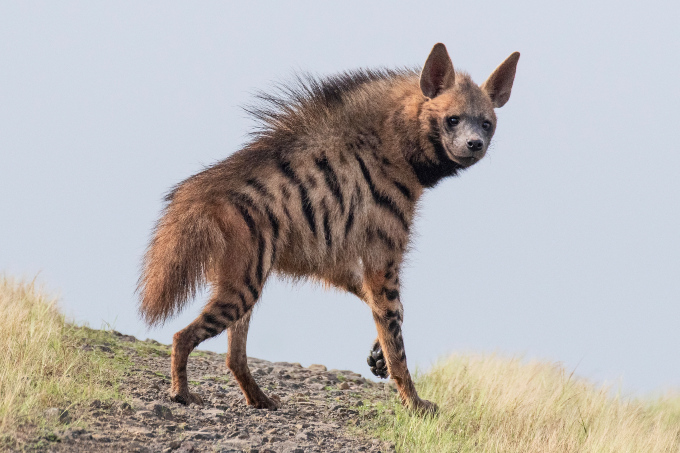
The striped hyena (Hyaena hyaena) is a medium-sized scavenger, known for its distinctive striped coat and famous “laugh.” It is shyer and more solitary than the better-known spotted hyena.
Appearance
Weight: 22–55 kg (48–121 lbs)
Length: 85–130 cm (33–51 inches) plus a 25–40 cm (10–16 inch) tail
Shoulder height: 60–80 cm (24–31 inches)
Coat: Grayish-brown or beige with distinct black vertical stripes on the body and legs
Key features:
Thick, muscular neck and shoulders
Long, bushy tail
Large, pointed ears
A mane of long hair running from the back of the head to the tail (erects when threatened, making it look bigger)
Habitat
Dry, open country:
Semi-deserts and deserts
Scrublands and savannas
Rocky hills and ravines
Avoids dense forests and high mountains
Where Usually Found?
Found across North and East Africa, the Middle East, and South Asia.
Region
Countries
Africa
Morocco, Algeria, Tunisia, Libya, Egypt, Sudan, Ethiopia, Somalia, Kenya, Tanzania
Middle East
Israel, Jordan, Saudi Arabia, Iran, Iraq, Afghanistan, Pakistan
South Asia
India (especially Rajasthan, Gujarat, Madhya Pradesh), Nepal
Note: The striped hyena is extinct or extremely rare in many parts of its former range (most of Europe, Turkey, the Caucasus).
Behavior & Diet
Primarily a scavenger: Eats carcasses of large animals (deer, cattle, camels) left by tigers, leopards, or wolves.
Not picky: Also eats insects, fruits, melons, eggs, small mammals, reptiles, and even garbage near villages.
Solitary or in pairs: Unlike spotted hyenas (which live in large clans), striped hyenas live alone or in small family groups (male-female pair with cubs).
Nocturnal: Sleeps in caves, rock crevices, or thick bushes during the day. Hunts/forages at night.
Weak hunter: Lacks the speed and power of spotted hyenas. Rarely kills its own prey (only small animals like hares, rodents, birds).
The “Laugh” and Other Sounds
Giggle/laugh: Usually a sign of excitement or submission (not actual humor).
Howl: A long, eerie, wailing call used to communicate with other hyenas over long distances.
Growl and grunt: Warning or aggression.
“Whoop” sound: A series of short calls repeated every few seconds.
Interesting Facts
No laughing matter: Striped hyenas can crush and digest bones, horns, and hooves thanks to incredibly powerful jaws and strong stomach acid.
Not a dog or cat: Hyenas are closer to cats than dogs genetically, but belong to their own unique family (Hyaenidae).
Folklore and fear: In many cultures (especially South Asia and the Middle East), striped hyenas are believed to be witches, grave-diggers, or shape-shifters. This superstition leads to persecution.
Man-eater? Very rare. Unlike spotted hyenas (which have attacked humans in Africa), striped hyenas are shy and avoid people. Only a handful of attacks are recorded, usually involving rabid animals.
Digging experts: They dig their own dens or enlarge existing burrows made by porcupines or foxes. A single den may be used for years.
“Paste” marking: Hyenas produce a thick, smelly paste from their anal glands and smear it on grass and rocks to mark their territory.
Tail language: When threatened, a striped hyena raises its mane and tucks its tail between its legs (submission). When excited, the tail sticks straight up.
Good mother: Female gives birth to 2–4 cubs in a hidden den. Cubs are born with eyes open and stripes visible. Mother moves them to a new den every few weeks to avoid predators.
Conservation Status
Near Threatened (IUCN). Population is declining. Estimated 5,000–10,000 remain in the wild.
Major threats:
Persecution by humans: Poisoned, shot, or trapped because they are seen as dirty, dangerous, or bad luck.
Habitat loss: Conversion of wild land to farms and cities.
Roadkill: Killed by vehicles at night.
Decline of carcasses: As wild prey (gazelles, deer) disappear, hyenas lose their food source.
Range: Extinct from at least 10 countries (most of Europe, Senegal, Israel? – nearly extinct there). Still present but rare in most of Africa and Asia.
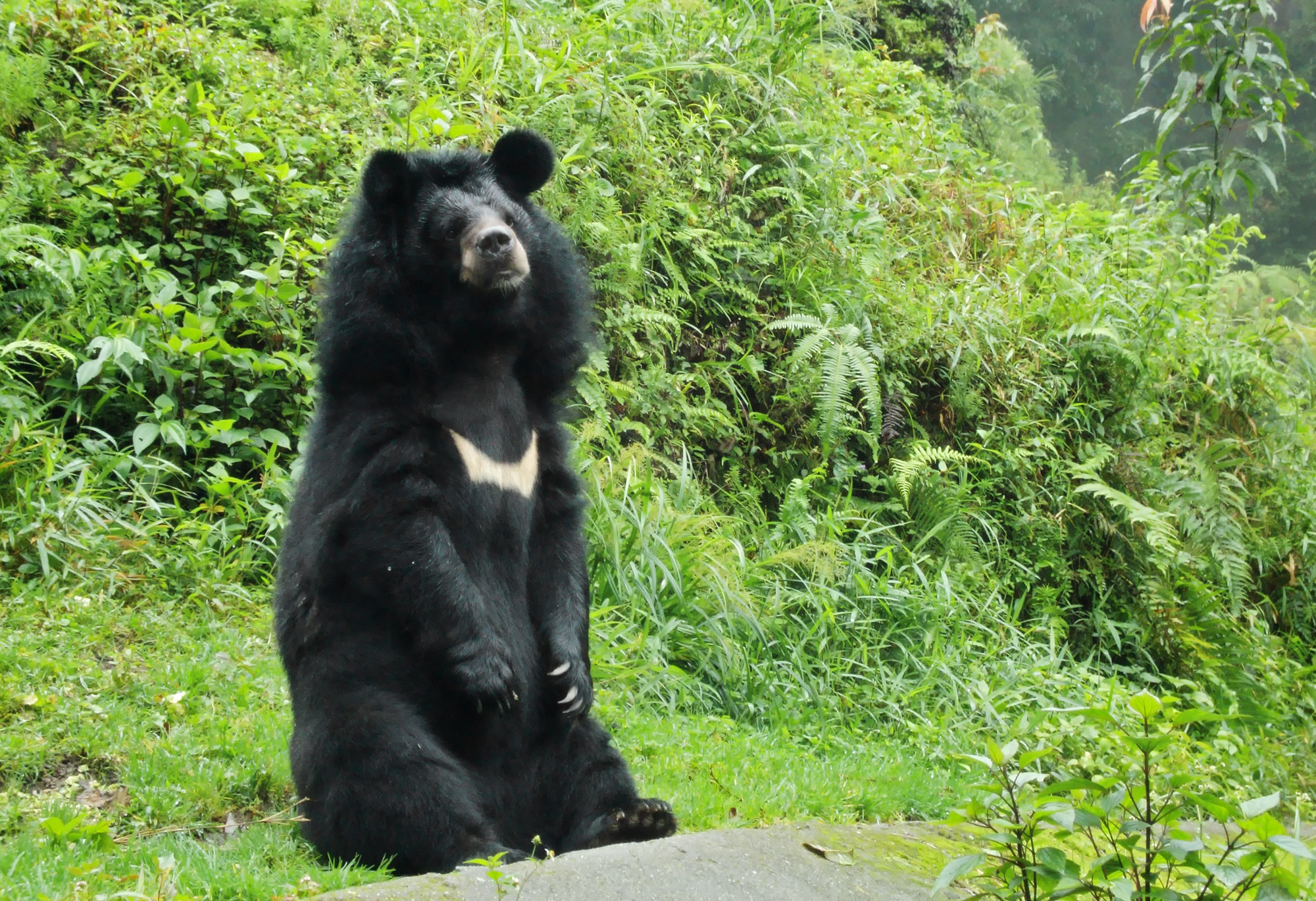
The Asiatic black bear (Ursus thibetanus), also known as the Moon Bear or White-chested Bear, is a medium-sized bear species native to the forests of Asia. It is easily recognized by the distinctive white or cream crescent on its chest.
Appearance
Coat: Shaggy, glossy black fur. No brown phase like American black bears.
Chest Mark: A distinctive V-shaped or crescent-shaped white patch on the chest – this is its most famous feature and the reason for the “moon bear” nickname.
Ears: Very large, round, and set wide apart – much larger than other bears (helps with cooling in humid forests).
Size: Smaller than brown bears but larger than sun bears.
Weight: 60–200 kg (130–440 lbs). Males are larger than females.
Length: 1.2–1.9 meters (4–6.2 feet).
Shoulder height: 70–100 cm (28–39 inches).
Claws: Strong, curved, and sharp – excellent tree climbers.
Habitat
Lives in forested, hilly, and mountainous regions across Asia. Prefers:
Deciduous and evergreen forests
Mixed broadleaf and coniferous forests
Elevations from sea level up to 4,000 meters (13,000 feet) – they move up in summer and down in winter
Where Usually Found?
Found across southern, eastern, and southeastern Asia across 18 countries:
Region
Countries
South Asia
India, Nepal, Bhutan, Bangladesh (rare), Pakistan
East Asia
China, Taiwan, Japan, North & South Korea
Southeast Asia
Myanmar, Thailand, Laos, Vietnam, Cambodia (rare), Malaysia
Central Asia
Afghanistan, eastern Russia (far east), northern Iran
Largest populations: Japan (especially Honshu and Shikoku), Russia (Primorsky Krai), and northeastern India (Himalayan foothills).
Behavior & Diet
Omnivore: Eats fruits (berries, figs, acorns), nuts, insects, honey, bird eggs, small mammals, carrion, and occasionally livestock.
Excellent climber: Spends a lot of time in trees. They build nests in trees to sleep or feed on fruits.
Hibernation (partial): In colder regions (Japan, Russia, China), they den up in hollow trees or caves for 3–5 months. In warmer tropical areas, they do not hibernate.
Nocturnal or crepuscular: Active mostly at night. Sleeps in trees or caves during the day.
Solitary: Adults live alone except for mothers with cubs.
Interesting Facts
Moon bear name: The white chest crescent is often compared to a waxing or waning moon – hence “moon bear.”
Tree nests: They are one of the few bear species that build platform nests in trees by breaking branches and gathering leaves to sleep on.
Human conflict: Asiatic black bears are more aggressive toward humans than American black bears. They have a reputation for unprovoked attacks, especially in India and Japan. Each year, several people are killed or injured.
Bile farm victims: Sadly, these bears are the primary victims of the illegal bear bile trade in Asia. Thousands are kept in tiny cages on “bile farms” where bile is extracted from their gallbladders for traditional medicine.
High-altitude travelers: In the Himalayas, they live alongside brown bears and snow leopards. They move to higher elevations (above 3,500 meters) in summer to escape heat.
Compared to American black bear: They look similar but can be told apart by:
Asiatic: White chest patch, larger ears, usually a crest of fur behind the head.
American: No chest patch, smaller ears, no fur crest.
Good memory: Like all bears, they have excellent long-term memory for food sources and return to the same fruiting trees year after year.
Conservation Status
Vulnerable (IUCN). Population is declining. Estimates suggest 30,000–50,000 remain in the wild.
Major threats:
Illegal bear bile farming – thousands trapped from the wild for this cruel trade.
Poaching – for paws, gallbladders, and skins.
Habitat loss – deforestation for agriculture and timber.
Human-wildlife conflict – killed as “pests” when they raid crops or attack livestock.
Protected in most countries, but enforcement is weak. Listed in CITES Appendix I (international trade banned except in exceptional circumstances).