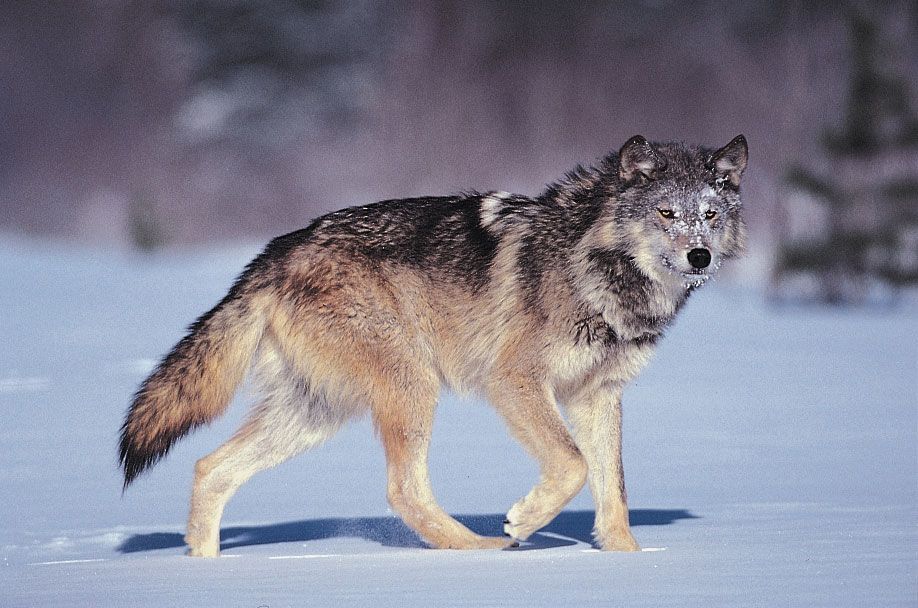
What is it?
The gray wolf (Canis lupus) is the largest wild member of the dog family and the ancestor of all domestic dogs.
Appearance
- Weight: 25–60 kg (55–135 lbs)
- Length: 1.2–2 meters (4–6.5 feet)
- Coat: Thick fur, usually gray but can be white, black, or brown
- Key features: Broad head, large triangular ears, long bushy tail, huge paws
Habitat
Forests, tundra, grasslands, deserts, and mountains across the Northern Hemisphere.
Where Usually Found?
- North America: Alaska, Canada, northern USA (Great Lakes, Rocky Mountains)
- Europe: Recovering populations in Spain, Italy, Germany, Poland, Scandinavia
- Asia: Russia (largest population), China, Mongolia, India (small numbers)
Pack Life
- Live in family groups called packs (5–12 members)
- Only the alpha pair breeds
- Pups are raised by the entire pack
Diet
- Apex predator – hunts deer, elk, moose, caribou, wild boar
- Also eats beavers, hares, and rodents
- Can eat 8–11 lbs of meat per day
Interesting Facts
- Ancestor of all dogs – domesticated 20,000–40,000 years ago.
- Cannot roar – communicates with howls, barks, growls, and whines.
- Bite force: 1,500 psi (double a German Shepherd).
- Speed: 50–60 km/h (30–37 mph) in short bursts.
- Smell: 100 times better than humans.
- Rarely attacks humans – only 2 confirmed fatal attacks in North America in 100 years.
- Yellowstone success story – reintroduced in 1995, restored the ecosystem.
Conservation Status
Least Concern globally (200,000–250,000 remain). But endangered in Mexico, the Middle East, and parts of India.
Threats
Persecution by ranchers, habitat loss, illegal hunting.
Leave a Reply