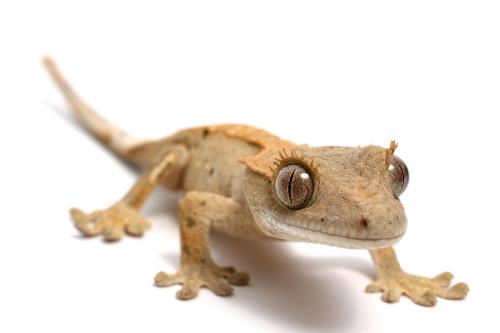
- Scientific name: Order Squamata (suborder Lacertilia) – over 7,000 species
- Size: Varies enormously – from 1.6 cm (0.6 inches) [dwarf gecko] to 3 meters (10 feet) [Komodo dragon]
- Appearance: Elongated bodies, four legs (usually), long tails, scaly skin, movable eyelids (except geckos), and external ear openings
- Habitat: Found on every continent except Antarctica – deserts, rainforests, mountains, grasslands, swamps, and even urban gardens
- Where found: Worldwide except Antarctica. Highest diversity in Australia, South America, Southeast Asia, and Africa
| Region | Examples |
|---|---|
| Americas | Iguanas, anoles, Gila monster, collared lizards |
| Australia | Goannas (monitors), bearded dragons, skinks, geckos |
| Africa | Chameleons, geckos, skinks, monitor lizards |
| Asia | Draco lizards (flying), tokay geckos, water monitors |
| Europe | Wall lizards, slow worms (legless), geckos |
- Diet: Mostly insectivorous (ants, beetles, crickets, spiders). Larger species eat small mammals, birds, eggs, other lizards, and even carrion (Komodo dragon eats deer and water buffalo)
- Behavior: Most are diurnal (active by day). Many are territorial – males display push-ups, head-bobbing, and dewlap extensions (iguanas)
- Defense mechanisms:
- Tail autotomy: Shedding tail to distract predators (regrows later)
- Camouflage: Color-changing (chameleons, anoles)
- Venom (Gila monster, beaded lizard – rare)
- Inflation (thorny devil, frilled-neck lizard)
- Special adaptations:
- Flying lizards (Draco): Glide using rib-supported wing-like flaps
- Geckos: Sticky toe pads (millions of microscopic hairs) to climb smooth surfaces and even walk upside down on glass
- Chameleons: Independently moving eyes, lightning-fast tongue (longer than body) to catch insects
- Horned lizards: Shoot blood from their eyes to confuse predators
- Reproduction: Most lay eggs (oviparous), some give live birth (viviparous – common in cold climates). Some species reproduce parthenogenetically (all-female, no males needed)
- Lifespan: 2–10 years (small species) | 10–30 years (large species) | Komodo dragon up to 30 years
- Largest species: Komodo dragon (3 m / 10 ft, 70 kg / 150 lbs)
- Smallest species: Dwarf gecko (1.6 cm / 0.6 in, 0.1 grams)
- Conservation status: Many species are threatened by habitat loss, invasive species, and pet trade
| Status | Examples |
|---|---|
| Critically Endangered | St. Croix ground lizard, Utila iguana |
| Endangered | Galápagos pink land iguana, Fiji crested iguana |
| Vulnerable | Komodo dragon, various chameleons |
| Least Concern | Most geckos, anoles, skinks |
- Biggest threats: Habitat destruction (deforestation for palm oil, agriculture), illegal pet trade, climate change (affects egg incubation temperature that determines sex in many species), invasive predators (cats, rats eating eggs and young)
- Fun fact 1: A group of lizards is called a “lounge” or “lounge of lizards.”
- Fun fact 2: The Komodo dragon has venom glands (discovered in 2009) – not just bacteria in its mouth as previously believed.
- Fun fact 3: Geckos can cling to surfaces because of van der Waals forces – millions of microscopic hair-like structures (setae) that create molecular attraction.
- Fun fact 4: The thorny devil (Australia) collects water on its spiky body and channels it to its mouth using capillary action.
- Fun fact 5: Several lizard species are parthenogenetic (all-female). The New Mexico whiptail reproduces entirely without males.
- Fun fact 6: The green basilisk lizard runs on water – called the “Jesus Christ lizard” – for up to 5 meters (15 feet) before sinking.
- Fun fact 7: Some lizards can live without food for months (slow metabolism). Gila monsters store fat in their tails.
Leave a Reply