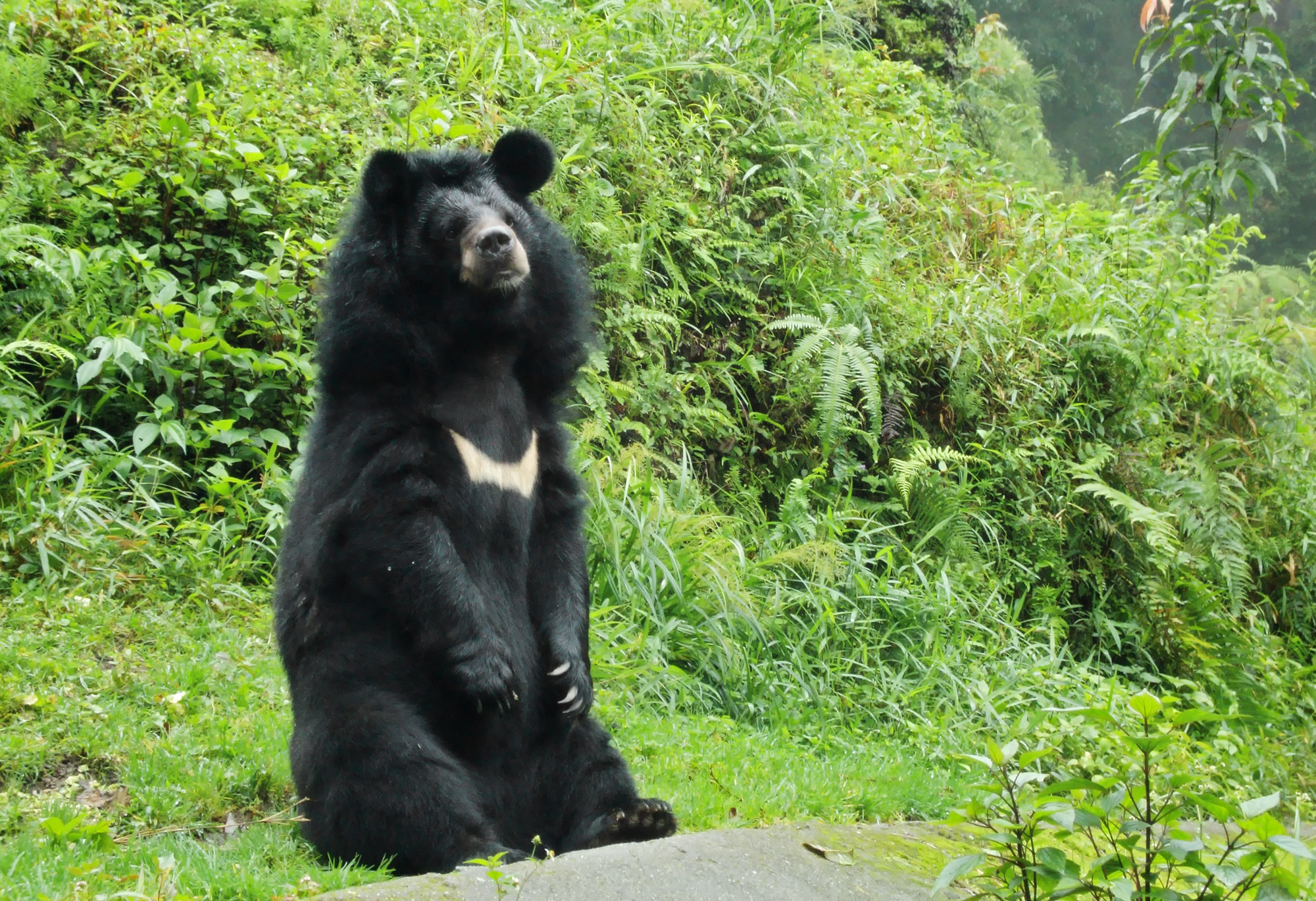
What is it?
The Asiatic black bear (Ursus thibetanus), also known as the Moon Bear or White-chested Bear, is a medium-sized bear species native to the forests of Asia. It is easily recognized by the distinctive white or cream crescent on its chest.
Appearance
- Coat: Shaggy, glossy black fur. No brown phase like American black bears.
- Chest Mark: A distinctive V-shaped or crescent-shaped white patch on the chest – this is its most famous feature and the reason for the “moon bear” nickname.
- Ears: Very large, round, and set wide apart – much larger than other bears (helps with cooling in humid forests).
- Size: Smaller than brown bears but larger than sun bears.
- Weight: 60–200 kg (130–440 lbs). Males are larger than females.
- Length: 1.2–1.9 meters (4–6.2 feet).
- Shoulder height: 70–100 cm (28–39 inches).
- Claws: Strong, curved, and sharp – excellent tree climbers.
Habitat
Lives in forested, hilly, and mountainous regions across Asia. Prefers:
- Deciduous and evergreen forests
- Mixed broadleaf and coniferous forests
- Elevations from sea level up to 4,000 meters (13,000 feet) – they move up in summer and down in winter
Where Usually Found?
Found across southern, eastern, and southeastern Asia across 18 countries:
| Region | Countries |
|---|---|
| South Asia | India, Nepal, Bhutan, Bangladesh (rare), Pakistan |
| East Asia | China, Taiwan, Japan, North & South Korea |
| Southeast Asia | Myanmar, Thailand, Laos, Vietnam, Cambodia (rare), Malaysia |
| Central Asia | Afghanistan, eastern Russia (far east), northern Iran |
Largest populations: Japan (especially Honshu and Shikoku), Russia (Primorsky Krai), and northeastern India (Himalayan foothills).
Behavior & Diet
- Omnivore: Eats fruits (berries, figs, acorns), nuts, insects, honey, bird eggs, small mammals, carrion, and occasionally livestock.
- Excellent climber: Spends a lot of time in trees. They build nests in trees to sleep or feed on fruits.
- Hibernation (partial): In colder regions (Japan, Russia, China), they den up in hollow trees or caves for 3–5 months. In warmer tropical areas, they do not hibernate.
- Nocturnal or crepuscular: Active mostly at night. Sleeps in trees or caves during the day.
- Solitary: Adults live alone except for mothers with cubs.
Interesting Facts
- Moon bear name: The white chest crescent is often compared to a waxing or waning moon – hence “moon bear.”
- Tree nests: They are one of the few bear species that build platform nests in trees by breaking branches and gathering leaves to sleep on.
- Human conflict: Asiatic black bears are more aggressive toward humans than American black bears. They have a reputation for unprovoked attacks, especially in India and Japan. Each year, several people are killed or injured.
- Bile farm victims: Sadly, these bears are the primary victims of the illegal bear bile trade in Asia. Thousands are kept in tiny cages on “bile farms” where bile is extracted from their gallbladders for traditional medicine.
- High-altitude travelers: In the Himalayas, they live alongside brown bears and snow leopards. They move to higher elevations (above 3,500 meters) in summer to escape heat.
- Compared to American black bear: They look similar but can be told apart by:
- Asiatic: White chest patch, larger ears, usually a crest of fur behind the head.
- American: No chest patch, smaller ears, no fur crest.
- Good memory: Like all bears, they have excellent long-term memory for food sources and return to the same fruiting trees year after year.
Conservation Status
Vulnerable (IUCN). Population is declining. Estimates suggest 30,000–50,000 remain in the wild.
Major threats:
- Illegal bear bile farming – thousands trapped from the wild for this cruel trade.
- Poaching – for paws, gallbladders, and skins.
- Habitat loss – deforestation for agriculture and timber.
- Human-wildlife conflict – killed as “pests” when they raid crops or attack livestock.
Protected in most countries, but enforcement is weak. Listed in CITES Appendix I (international trade banned except in exceptional circumstances).
Leave a Reply