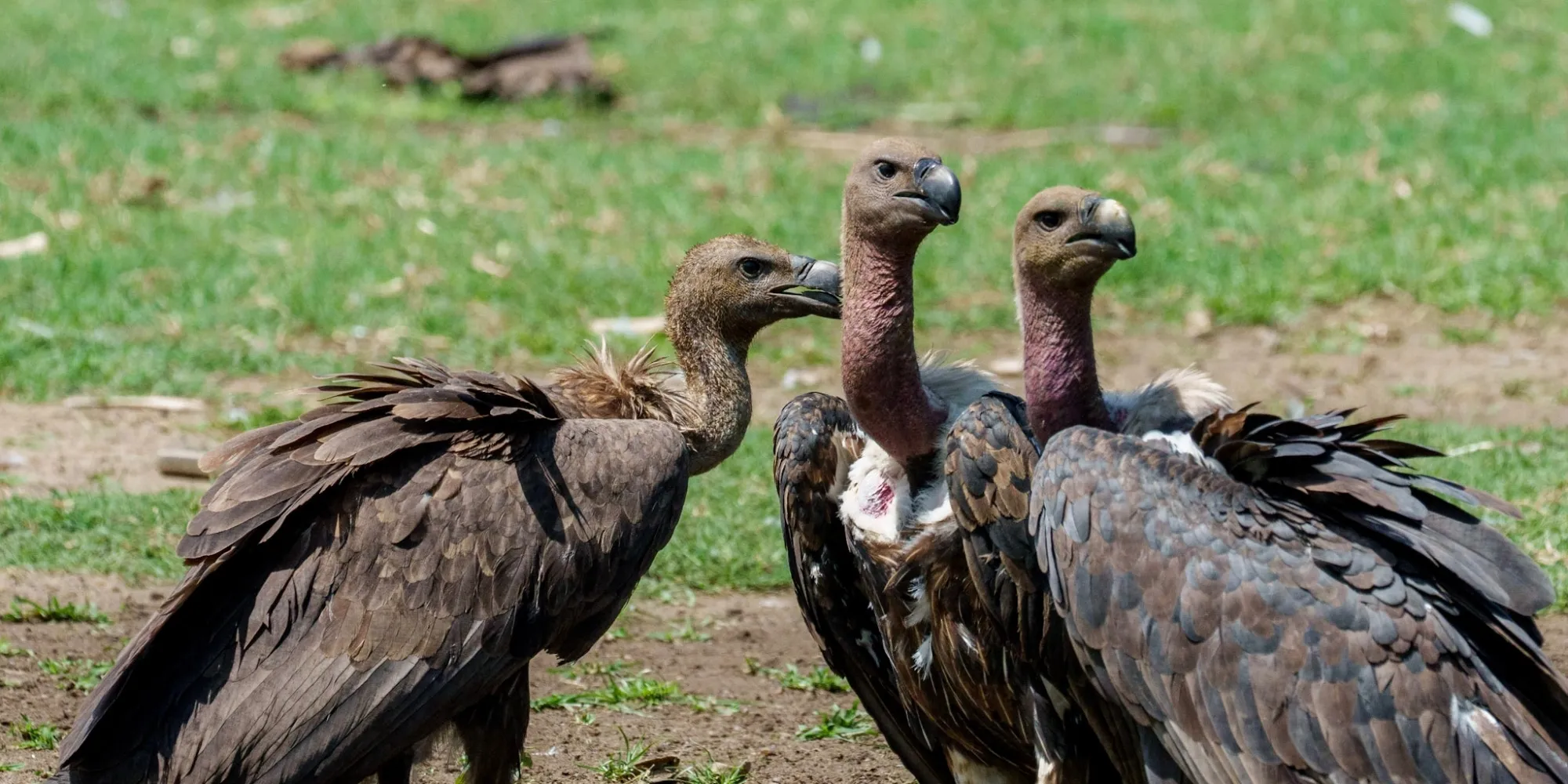
- Scientific name: Two groups – Accipitridae (Old World vultures, 16 species) and Cathartidae (New World vultures, 7 species)
- Size: Varies greatly – from 0.8 kg (1.8 lbs) to 12 kg (26 lbs). Wingspan up to 3 meters (10 feet) for the cinereous vulture
- Appearance: Mostly bald heads and necks (prevents feathers from getting bloody), hooked beaks, broad wings, dark plumage (some have bright red, yellow, or orange heads)
- Habitat: All continents except Australia and Antarctica – open country, grasslands, savannas, deserts, mountains, forests, and near human settlements
- Where found: Old World vultures – Africa, Europe, Asia. New World vultures – North, Central, and South America
- Diet: Strictly carrion (dead animals) – they are nature’s cleanup crew. Eat rotting flesh, bones, and carcasses
- Behavior: Highly social (feed in flocks, roost together, nest in colonies). Soaring fliers – can stay in the air for hours without flapping
- Special skills: Incredible eyesight (Old World) or amazing sense of smell (New World – especially turkey vultures, which can smell a dead animal from 1.6 km / 1 mile away)
- Digestion: Extremely strong stomach acid (pH near 0) that kills anthrax, rabies, botulism, and cholera bacteria. They can safely eat diseased carcasses
- Speed: Can fly 60–80 km/h (37–50 mph) while soaring
- Lifespan: 10–30 years in wild | Up to 50 years in captivity
- Conservation status: Critically endangered (many species). Vultures are among the most threatened birds on Earth
| Species | Status |
|---|---|
| Indian vulture, Red-headed vulture, White-rumped vulture | Critically Endangered |
| Himalayan griffon | Near Threatened |
| Turkey vulture, Black vulture | Least Concern |
- Biggest threats: Poisoning (from veterinary drug diclofenac – killed 99% of some Asian vulture species), electrocution from power lines, poisoning by poachers (to hide animal carcasses), habitat loss
- Fun fact 1: A flock of vultures is called a “wake” or a “committee.”
- Fun fact 2: They urinate on their own legs to cool down (uric acid also kills bacteria from carcasses).
- Fun fact 3: Vultures rarely attack live animals – they have weak feet and cannot carry prey like eagles.
- Ecological role: Essential cleaners – they remove rotting carcasses from the environment, preventing the spread of diseases like rabies and anthrax. Without vultures, feral dogs and rats take over (spreading disease to humans).
Leave a Reply