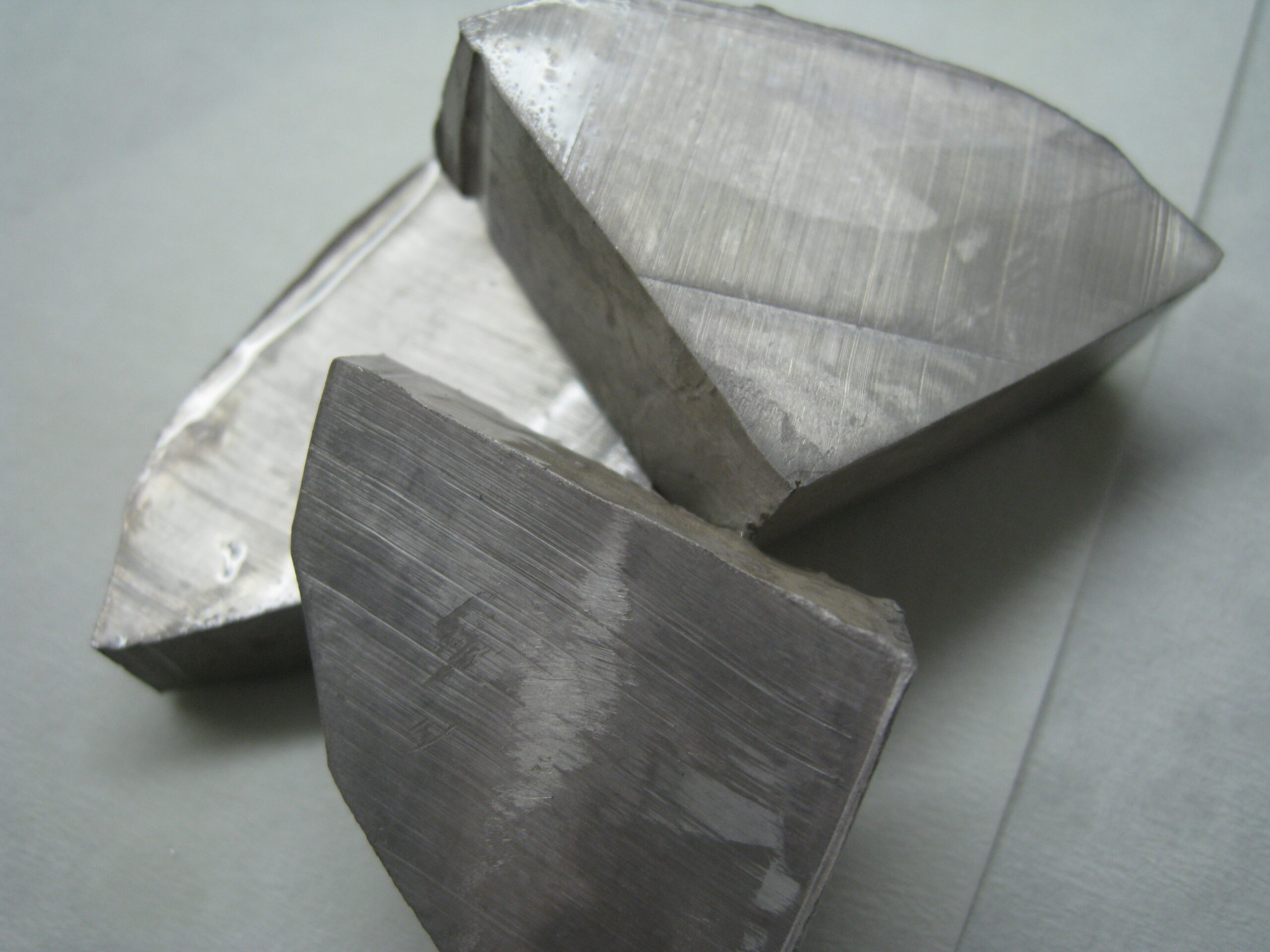
What Is It?
Sodium is a soft, silvery-white metal, atomic number 11. It is highly reactive, especially with water, and is never found pure in nature. It is the sixth most abundant element in Earth’s crust. Its symbol Na comes from the Latin name “natrium.”
Key Properties
- Soft (can be cut with a knife)
- Silvery-white, but tarnishes instantly in air
- Extremely reactive with water (produces hydrogen gas and heat)
- Low melting point for a metal (97.8°C)
- Good conductor of electricity
Where It’s Used (Real Life)
- Table salt: Sodium chloride (NaCl) is the primary seasoning and food preservative.
- Baking soda: Sodium bicarbonate (NaHCO₃) is used in baking, cleaning, and as an antacid.
- Soap and detergents: Sodium compounds (sodium hydroxide and sodium carbonates) are key ingredients.
- Street lights: High-pressure sodium lamps produce a characteristic yellow-orange glow and are very energy-efficient.
- Water softening: Sodium ions replace calcium and magnesium in hard water.
- Glass making: Sodium carbonate (soda ash) lowers the melting point of silica to make glass.
- Medical saline: Sterile sodium chloride solution is used for IV drips and wound cleaning.
Interesting Facts (Short)
- Pure sodium explodes violently on contact with water, producing hydrogen gas that often ignites.
- The human body contains about 100 grams of sodium, mostly in blood and other fluids.
- Sodium is essential for nerve impulses and muscle contractions. Too little causes cramps; too much raises blood pressure.
- Most dietary sodium comes from processed foods, not the salt shaker.
- Sodium metal is stored under oil or kerosene to keep it away from air and moisture.
- It was first isolated in 1807 by Sir Humphry Davy using electrolysis.
- Sodium is produced commercially by electrolysis of molten sodium chloride.
- Sodium vapor lamps are so efficient that they are used for highway and security lighting.
- When burned in air, sodium produces a bright yellow flame.
- Liquid sodium is used as a coolant in some nuclear reactors because it transfers heat very efficiently.
Safety Note
Pure sodium metal is dangerous. It reacts violently with water, acids, and even moisture in the air. Never handle it without training. Sodium compounds (salt, baking soda) are safe in normal amounts but excessive sodium in the diet contributes to high blood pressure and heart disease.
One-Sentence Summary
Sodium is a soft, highly reactive metal that explodes in water, but its compounds—especially table salt—are essential for life and used in countless products.
Quick Reference for Science Lovers
- Symbol: Na (from Latin “natrium”)
- Atomic number: 11
- Atomic mass: approximately 22.99 u
- Electron configuration: 1s² 2s² 2p⁶ 3s¹
- Melting point: 97.8 degrees Celsius
- Boiling point: 883 degrees Celsius
- Density: 0.97 grams per cubic centimeter (floats on water)
- Main isotope: Sodium-23 (100 percent natural abundance, stable)
Video Reference
Leave a Reply