Generic selectors
Exact matches only
Search in title
Search in content
Post Type Selectors

Tag: Elements

  • Helium (He)

    Helium (He)

    What Is Helium?

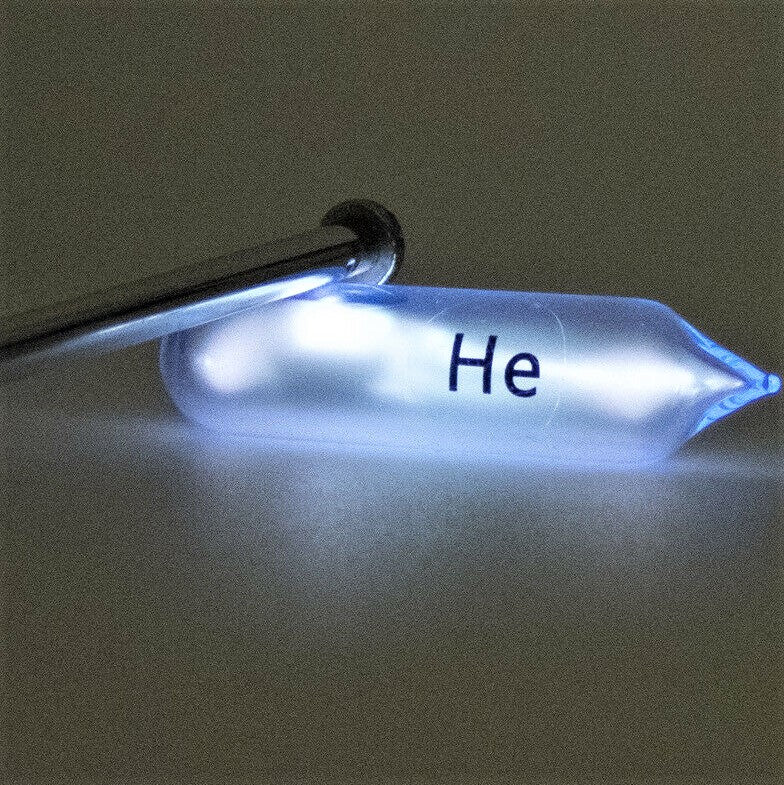
    Helium is the second element on the periodic table (atomic number 2). It is a colorless, odorless, tasteless, non-toxic, and inert gas. Helium is the second most abundant element in the universe, but it is relatively rare on Earth.

    A helium atom has two protons, two neutrons, and two electrons. Unlike almost every other element, helium does not combine with other atoms. It is called a noble gas because it almost never forms chemical compounds.

    Interesting fact: Helium was first discovered in the Sun before it was found on Earth. Its name comes from “Helios,” the Greek word for Sun.


    Key Properties

    PropertyWhat It Means
    ColorColorless
    SmellOdorless
    TasteTasteless
    State at room temperatureGas (He)
    ReactivityAlmost zero (inert)
    DensityVery light — second lightest after hydrogen
    FlammabilityNot flammable

    Where Do We Find Helium in Daily Life?

    You encounter helium more often than you realize, mainly because of its unique physical properties.

    In Balloons and Airships
    Helium is lighter than air, so it makes balloons float. Unlike hydrogen, helium is not flammable, making it safe for party balloons, weather balloons, and blimps.

    In Medicine
    Liquid helium is extremely cold (about -269 degrees Celsius). It is used to cool the superconducting magnets inside MRI (Magnetic Resonance Imaging) machines. Without liquid helium, most MRI machines would not work.

    In Scientific Research
    Helium is used to cool particle accelerators and powerful microscopes to near absolute zero. It is also used as a carrier gas in gas chromatography, a technique for separating chemical mixtures.

    In Industry
    Helium is used as a shielding gas in welding because it does not react with the hot metal. It is also used to pressurize and purge rocket fuel tanks.

    In Diving
    Deep-sea divers sometimes breathe a mixture of helium and oxygen instead of regular air. Helium is less soluble in blood than nitrogen, which reduces the risk of decompression sickness (the bends). It also makes divers’ voices sound squeaky and high-pitched.

    In Leak Detection
    Because helium atoms are very small and inert, manufacturers inject helium into pipes or containers and use special sensors to detect tiny leaks.


    Interesting Facts About Helium

    1. Helium is the only element that was discovered outside Earth before being found on Earth. Scientists saw it in the Sun’s spectrum in 1868, and it was found on Earth in 1882.
    2. Helium has the lowest boiling point of any element: minus 268.93 degrees Celsius. It remains a liquid even at absolute zero unless placed under pressure.
    3. Helium does not freeze solid at normal pressure. To make solid helium, you must apply about 25 times normal atmospheric pressure even at temperatures near absolute zero.
    4. When you inhale helium from a balloon, your voice becomes squeaky and high-pitched. This happens because sound travels faster in the lighter helium gas than in air. Warning: Inhaling too much helium can cause suffocation because it displaces oxygen.
    5. Helium is a non-renewable resource on Earth. It forms naturally from the radioactive decay of uranium and thorium deep underground, where it gets trapped in natural gas deposits. Once released into the atmosphere, it becomes so light that it escapes into space forever.
    6. The United States used to store a massive national helium reserve in Texas. This reserve once supplied much of the world’s helium.
    7. Helium is used to cool the Large Hadron Collider at CERN, the world’s largest particle accelerator, to temperatures colder than outer space.
    8. Some stars burn helium into carbon and oxygen through nuclear fusion. This process happens in older, heavier stars.
    9. Helium is the second most abundant element in the universe after hydrogen, making up about 24 percent of all normal matter.
    10. There is a type of mineral called “hélium” or uranium-bearing minerals that contain small amounts of helium trapped from radioactive decay.

    A Safety Note

    While helium is not toxic or flammable, breathing it directly from a pressurized tank can cause lung damage or even death. Inhaling a small amount from a balloon for a funny voice is generally safe in moderation, but inhaling too much displaces oxygen and can cause dizziness, loss of consciousness, or brain damage. Never inhale helium directly from a tank.


    Summary in One Sentence

    Helium is the light, inert, non-flammable gas that makes balloons float, cools MRI machines, and is the second most abundant element in the universe but a limited resource on Earth.


    For Science Lovers (Quick Reference)

    • Symbol: He
    • Atomic number: 2
    • Atomic mass: approximately 4.0026 u
    • Electron configuration: 1s²
    • Melting point: does not solidify at normal pressure
    • Boiling point: -268.93 degrees Celsius
    • Density at room temperature: 0.1786 grams per liter (air is about 1.2 grams per liter)
    • Main isotopes: Helium-4 (most common), Helium-3 (rare, used in nuclear research)

    Video Reference

  • Hydrogen (H)

    Hydrogen (H)

    What Is Hydrogen?

    Hydrogen is the first element on the periodic table (atomic number 1). It is the lightest, simplest, and most abundant element in the entire universe. A single hydrogen atom contains just one proton and one electron — nothing more.

    On Earth, pure hydrogen is rare. It usually exists combined with other elements — most famously with oxygen to make water (H₂O).

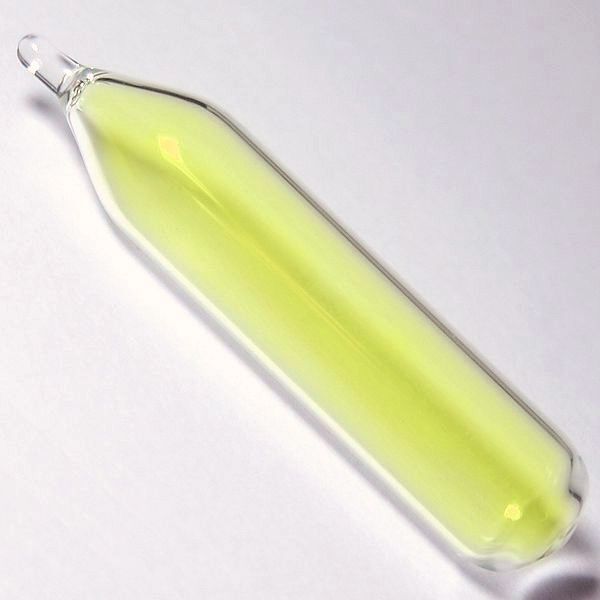
    Hydrogen discharge tube

    Interesting fact: About 75 percent of all normal matter in the universe is hydrogen.


    Key Properties

    PropertyWhat It Means
    ColorColorless
    SmellOdorless
    TasteTasteless
    State at room temperatureGas (H₂)
    ReactivityVery reactive, especially with oxygen
    FlammabilityExtremely flammable

    Where Do We Find Hydrogen in Daily Life?

    You do not usually see or touch pure hydrogen, but it is everywhere around you.

    In the Human Body
    You are about 10 percent hydrogen by weight. It is a key part of your DNA, proteins, and fats.

    In Water
    Every water molecule (H₂O) has two hydrogen atoms and one oxygen atom. No hydrogen equals no water equals no life.

    In Food
    Sugars, starches, and oils all contain hydrogen atoms in their molecular structures.

    In Energy and Fuel (Real-Life Uses)
    Hydrogen is becoming a clean energy source:

    • Hydrogen fuel cells power some cars, buses, and rockets. They combine hydrogen with oxygen to make electricity, and the only waste product is water vapor.
    • NASA uses liquid hydrogen to launch space shuttles.
    • Some industries use hydrogen to make ammonia (for fertilizers) and to process metals and oils.

    Interesting Facts About Hydrogen

    1. Hydrogen is the only element that does not have neutrons in its most common form (called protium).
    2. It is so light that Earth’s gravity cannot hold much of it in the atmosphere. Most of Earth’s hydrogen is bound up in water and other compounds.
    3. The Sun and other stars produce energy by fusing hydrogen atoms into helium. This process is called nuclear fusion.
    4. Hydrogen was the first element to exist after the Big Bang. All other elements were made from hydrogen by fusion inside stars.
    5. Liquid hydrogen is extremely cold — about minus 253 degrees Celsius. It can cause severe frostbite on contact.
    6. Hydrogen gas is about 14 times lighter than air. That is why hydrogen balloons float easily, but they are no longer used for parties because hydrogen is flammable. Helium is much safer.
    7. Some bacteria produce hydrogen gas as a waste product of their metabolism.
    8. Hydrogen can be stored in metal hydrides — solid materials that absorb and release hydrogen like a sponge.
    9. The hydrogen bomb, or thermonuclear bomb, uses fusion of hydrogen isotopes to release enormous energy. This is different from a simple atomic bomb.
    10. Hydrogen is the only element whose three main isotopes have different names: Protium (no neutrons), Deuterium (one neutron), and Tritium (two neutrons, radioactive).

    A Safety Note

    Pure hydrogen gas is highly flammable. A tiny spark can ignite it. That is why hydrogen balloons are not used for celebrations — helium is safer.


    Summary in One Sentence

    Hydrogen is the simplest, most abundant element in the universe, a building block of water and life, and a promising clean fuel for the future.


    For Science Lovers (Quick Reference)

    • Symbol: H
    • Atomic number: 1
    • Atomic mass: approximately 1.008 u
    • Electron configuration: 1s¹
    • Melting point: -259.14 degrees Celsius
    • Boiling point: -252.87 degrees Celsius
    • Main isotopes: Protium (¹H), Deuterium (²H), Tritium (³H – radioactive)

    Video Reference

  • All 118 Chemical Elements

    All 118 Chemical Elements

    Here is the complete list of all 118 known chemical elements, in order of increasing atomic number (serial order), along with their symbols:

    1. Hydrogen (H)

    2. Helium (He)

    3. Lithium (Li)

    4. Beryllium (Be)

    5. Boron (B)

    6. Carbon (C)

    7. Nitrogen (N)

    8. Oxygen (O)

    9. Fluorine (F)

    10. Neon (Ne)

    11. Sodium (Na)

    12. Magnesium (Mg)

    13. Aluminum (Al)

    14. Silicon (Si)

    15. Phosphorus (P)

    16. Sulfur (S)

    17. Chlorine (Cl)

    18. Argon (Ar)

    19. Potassium (K)

    20. Calcium (Ca)

    21. Scandium (Sc)

    22. Titanium (Ti)

    23. Vanadium (V)

    24. Chromium (Cr)

    25. Manganese (Mn)

    26. Iron (Fe)

    27. Cobalt (Co)

    28. Nickel (Ni)

    29. Copper (Cu)

    30. Zinc (Zn)

    31. Gallium (Ga)

    32. Germanium (Ge)

    33. Arsenic (As)

    34. Selenium (Se)

    35. Bromine (Br)

    36. Krypton (Kr)

    37. Rubidium (Rb)

    38. Strontium (Sr)

    39. Yttrium (Y)

    40. Zirconium (Zr)

    41. Niobium (Nb)

    42. Molybdenum (Mo)

    43. Technetium (Tc)

    44. Ruthenium (Ru)

    45. Rhodium (Rh)

    46. Palladium (Pd)

    47. Silver (Ag)

    48. Cadmium (Cd)

    49. Indium (In)

    50. Tin (Sn)

    51. Antimony (Sb)

    52. Tellurium (Te)

    53. Iodine (I)

    54. Xenon (Xe)

    55. Cesium (Cs)

    56. Barium (Ba)

    57. Lanthanum (La)

    58. Cerium (Ce)

    59. Praseodymium (Pr)

    60. Neodymium (Nd)

    61. Promethium (Pm)

    62. Samarium (Sm)

    63. Europium (Eu)

    64. Gadolinium (Gd)

    65. Terbium (Tb)

    66. Dysprosium (Dy)

    67. Holmium (Ho)

    68. Erbium (Er)

    69. Thulium (Tm)

    70. Ytterbium (Yb)

    71. Lutetium (Lu)

    72. Hafnium (Hf)

    73. Tantalum (Ta)

    74. Tungsten (W)

    75. Rhenium (Re)

    76. Osmium (Os)

    77. Iridium (Ir)

    78. Platinum (Pt)

    79. Gold (Au)

    80. Mercury (Hg)

    81. Thallium (Tl)

    82. Lead (Pb)

    83. Bismuth (Bi)

    84. Polonium (Po)

    85. Astatine (At)

    86. Radon (Rn)

    87. Francium (Fr)

    88. Radium (Ra)

    89. Actinium (Ac)

    90. Thorium (Th)

    91. Protactinium (Pa)

    92. Uranium (U)

    93. Neptunium (Np)

    94. Plutonium (Pu)

    95. Americium (Am)

    96. Curium (Cm)

    97. Berkelium (Bk)

    98. Californium (Cf)

    99. Einsteinium (Es)

    100. Fermium (Fm)

    101. Mendelevium (Md)

    102. Nobelium (No)

    103. Lawrencium (Lr)

    104. Rutherfordium (Rf)

    105. Dubnium (Db)

    106. Seaborgium (Sg)

    107. Bohrium (Bh)

    108. Hassium (Hs)

    109. Meitnerium (Mt)

    110. Darmstadtium (Ds)

    111. Roentgenium (Rg)

    112. Copernicium (Cn)

    113. Nihonium (Nh)

    114. Flerovium (Fl)

    115. Moscovium (Mc)

    116. Livermorium (Lv)

    117. Tennessine (Ts)

    118. Oganesson (Og)

    119. Video Reference

      118 Elements Complete Playlists
Insert math as
Block
Inline
Additional settings
Formula color
Text color
#333333
Type math using LaTeX
Preview
\({}\)
Nothing to preview
Insert