What Is It?
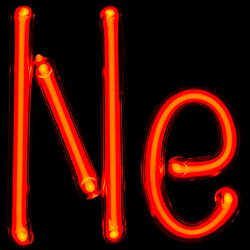
Neon is a colorless, odorless, inert gas, atomic number 10. It is a noble gas, meaning it almost never reacts with other elements. It is the fourth most abundant element in the universe but rare on Earth. It was discovered in 1898 by Sir William Ramsay and Morris Travers.
Key Properties
- Colorless as a gas; glows reddish-orange when electricity passes through it
- Odorless and tasteless
- Completely inert (no known stable compounds)
- Lighter than air (about two-thirds the density)
- Non-flammable
Where It’s Used (Real Life)
- Neon signs: The classic bright reddish-orange glow. Different gases and coated tubes produce other colors.
- Cryogenics: Liquid neon is used as a refrigerant for very cold applications (around -246°C).
- Lightning arresters: Protects electrical equipment from lightning strikes.
- Television tubes and lasers: Used in some gas lasers and historical plasma displays.
- High-voltage indicators: Small neon bulbs indicate that electrical equipment is live.
Interesting Facts (Short)
- The name comes from the Greek “neos,” meaning new.
- When Ramsay and Travers discovered neon, his 13-year-old son suggested the name.
- Neon is the fifth most abundant element in the universe but only 0.0018 percent of Earth’s atmosphere.
- Despite being rare on Earth, neon is extracted from liquid air through fractional distillation.
- Neon glows reddish-orange under electrical discharge. Other noble gases glow different colors: argon (lavender), krypton (white), xenon (blue).
- The “neon” signs in many colors actually use other gases or coated tubes. True neon is only reddish-orange.
- Liquid neon has 40 times the cooling capacity of liquid helium at its boiling point.
- Neon has three stable isotopes: neon-20, neon-21, and neon-22.
- It is produced in stars by nuclear fusion of carbon and oxygen.
- There are no known biological roles for neon.
Safety Note
Neon is completely non-toxic and inert. It poses no chemical hazard. However, it can act as a simple asphyxiant by displacing oxygen in enclosed spaces. Liquid neon causes cold burns.
One-Sentence Summary
Neon is an inert, non-flammable gas best known for its reddish-orange glow in signs, with no chemical reactions and no biological role.
Quick Reference for Science Lovers
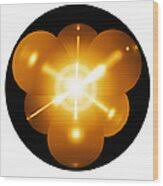
- Symbol: Ne
- Atomic number: 10
- Atomic mass: approximately 20.18 u
- Electron configuration: 1s² 2s² 2p⁶ (full outer shell)
- Melting point: -248.6 degrees Celsius
- Boiling point: -246.1 degrees Celsius
- Density (gas at 0°C): 0.900 grams per liter (lighter than air)
- Main isotopes: Neon-20 (about 90.5%), Neon-21 (about 0.3%), Neon-22 (about 9.2%)
Video Reference
Leave a Reply