What Is Fluorine?
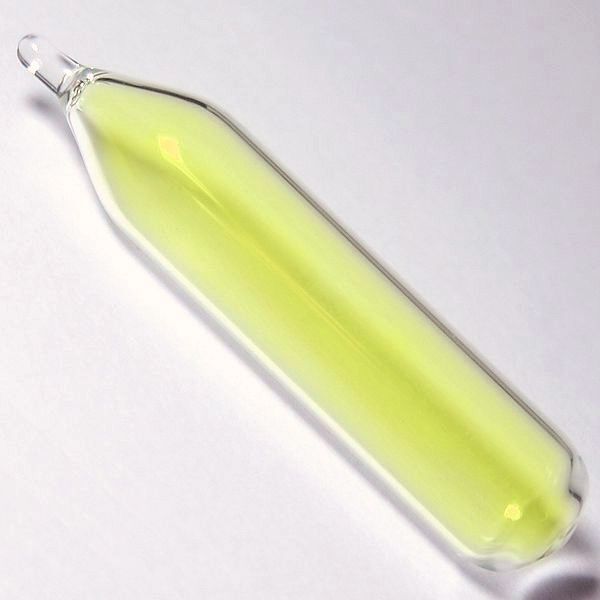
Fluorine is the ninth element on the periodic table (atomic number 9). It is a pale yellow-green gas at room temperature and is the most reactive and electronegative of all elements. This means it has the strongest tendency to grab electrons from other atoms. Fluorine reacts with nearly every other element — including noble gases like xenon and radon — often violently.
Because fluorine is so reactive, it is never found in pure form in nature. It exists only in compounds such as fluorite (calcium fluoride), fluorspar, and cryolite. Pure fluorine gas was not isolated until 1886, and many chemists died or were seriously injured trying to isolate it.
Interesting fact: Fluorine is so aggressive that it reacts with glass, brick, and even asbestos. It can set water on fire by displacing oxygen and forming hydrogen fluoride and ozone.
Key Properties
| Property | What It Means |
|---|---|
| Color | Pale yellow-green |
| Smell | Pungent, irritating |
| State at room temperature | Gas (F₂) |
| Reactivity | Extremely high (most reactive element) |
| Electronegativity | Highest of all elements (4.0 on Pauling scale) |
| Flammability | Not flammable, but causes other things to burn violently |
Where Do We Find Fluorine in Daily Life?
You are unlikely to ever see pure fluorine because it is too dangerous. However, fluorine compounds are everywhere.
In Toothpaste and Drinking Water
Fluoride compounds (such as sodium fluoride and stannous fluoride) are added to toothpaste and many public water supplies to prevent tooth decay. Fluoride strengthens tooth enamel by converting hydroxyapatite into the more acid-resistant fluorapatite. This makes teeth more resistant to cavities. Water fluoridation has been called one of the ten greatest public health achievements of the 20th century.
In Non-Stick Cookware
Teflon, the non-stick coating on pans and bakeware, is a polymer of carbon and fluorine called polytetrafluoroethylene (PTFE). The strong carbon-fluorine bonds make Teflon extremely slippery, heat-resistant, and chemically inert. Food does not stick to it, and it does not react with cooking ingredients.
In Refrigerators and Air Conditioners
Chlorofluorocarbons (CFCs) and hydrofluorocarbons (HFCs) were widely used as refrigerants in air conditioners, refrigerators, and freezers. However, CFCs were found to destroy the ozone layer and have been phased out under the Montreal Protocol. HFCs do not harm the ozone layer but are potent greenhouse gases and are also being phased down. Newer fluorine-based refrigerants with lower environmental impact are being developed.
In Pharmaceuticals
About 20 percent of all prescription drugs contain fluorine. Adding fluorine atoms to drug molecules can make them more stable, more easily absorbed by the body, or more effective. Common examples include fluoxetine (Prozac for depression), atorvastatin (Lipitor for cholesterol), ciprofloxacin (Cipro for infections), and many anesthetics, steroids, and cancer drugs.
In Plastics and Insulation
Fluoropolymers such as Teflon are used as insulation for wires and cables, especially in aerospace and high-temperature applications. Some waterproof fabrics and coatings also contain fluorinated compounds. The outer skin of many buildings is coated with fluoropolymer paints that resist weathering and pollution.
In Uranium Enrichment
Uranium hexafluoride (UF₆) is the compound used to enrich uranium for nuclear power plants and nuclear weapons. Uranium ore is converted into UF₆ gas, which is then separated by centrifuges to increase the concentration of the fissile uranium-235 isotope.
In Etching Glass
Hydrofluoric acid (HF) is used to etch glass. It dissolves silicon dioxide (the main component of glass), leaving frosted or carved patterns. This is used for decorative glass, glass scales on measuring instruments, and the etching of silicon wafers in computer chip manufacturing.
Interesting Facts About Fluorine
- Fluorine was discovered in the mineral fluorite (calcium fluoride) in the 1500s as a flux in metal refining. The element itself was not isolated until 1886 by French chemist Henri Moissan. He won the Nobel Prize for this work. Moissan used a platinum-iridium apparatus and electrolysis of hydrogen fluoride in liquid form at very low temperatures to finally isolate the pale yellow gas.
- Many chemists who tried to isolate fluorine suffered severe poisoning, burns, or death. They are collectively called “fluorine martyrs.” Sir Humphry Davy, who discovered sodium and potassium, was poisoned by fluorine compounds and nearly died. Two Belgian chemists died after breathing hydrogen fluoride. Moissan himself suffered severe fluorine poisoning multiple times but survived.
- Fluorine can react with noble gases, which were once thought to be completely inert. Xenon difluoride (XeF₂), xenon tetrafluoride (XeF₄), and even krypton difluoride (KrF₂) have been synthesized. This discovery in the 1960s forced chemists to rewrite the textbooks.
- Teflon was discovered by accident in 1938 by Roy Plunkett, a chemist at DuPont. He was trying to make a new refrigerant gas (tetrafluoroethylene). When he checked the cylinder, no gas came out. He cut it open and found a white, waxy powder — polymerized tetrafluoroethylene, or Teflon. It was later used on the first atomic bomb (to prevent corrosion from uranium hexafluoride) before becoming famous for cookware.
- Fluorine is so reactive that it corrodes platinum and gold. Platinum sparkles in fluorine at room temperature but is eventually destroyed. Only a few materials can contain fluorine gas safely. These include nickel, monel (a nickel-copper alloy), some fluoropolymers like Teflon, and copper when it forms a protective fluoride layer. Glass and ceramic are rapidly attacked and destroyed.
- Hydrogen fluoride (HF) is a weak acid in water but is extremely dangerous. It penetrates skin deeply and destroys underlying tissues and bone. Unlike most acid burns, HF burns may not hurt immediately. The fluoride ions react with calcium and magnesium in the body, causing deep tissue destruction and potentially fatal heart arrhythmias. Special calcium gluconate gel is the treatment for HF burns.
- Hydrofluoric acid is used to etch silicon wafers in computer chip manufacturing. This process is essential for making the microscopic circuits in your phone, computer, and every other electronic device. The semiconductor industry is one of the largest consumers of fluorine compounds.
- Fluorine is the 13th most abundant element in Earth’s crust. It is found primarily in the minerals fluorite (calcium fluoride), cryolite (sodium aluminum fluoride), and fluorapatite (calcium phosphate fluoride). The largest deposits of fluorite are in China, Mexico, Mongolia, and South Africa.
- The Montreal Protocol of 1987 phased out the production of CFCs after scientists discovered a hole in the ozone layer over Antarctica. Ozone-depleting substances were banned, and the ozone layer has been slowly recovering. The Montreal Protocol is widely considered the most successful international environmental treaty in history.
- Some frogs in the genus Lithodytes have skin that secretes fluorine-containing compounds. This is extremely rare in biology because fluorine is not commonly used in biochemistry. Only a handful of natural fluorine-containing organic compounds are known, mostly as plant toxins.
- Fluorine is used to make sulfur hexafluoride (SF₆), an incredibly potent greenhouse gas. One molecule of SF₆ has the warming effect of about 24,000 molecules of carbon dioxide. It also has a lifetime in the atmosphere of over 3,000 years. SF₆ is used as an electrical insulator in high-voltage circuit breakers and switchgear because of its excellent dielectric properties. Efforts are underway to find alternatives.
- Fluorinated compounds are used in firefighting foams (AFFF, or aqueous film-forming foam). These foams are extremely effective at extinguishing fuel fires because the fluorinated layer spreads rapidly over burning fuel, smothering the flames. However, these compounds (PFAS, or per- and polyfluoroalkyl substances) do not break down in the environment and have contaminated drinking water near military bases and airports. They are now being phased out due to health concerns.
- The carbon-fluorine bond is one of the strongest single bonds in organic chemistry. This is why fluorinated compounds are so stable and resistant to degradation. Some PFAS chemicals have been called “forever chemicals” because they persist in the environment for decades or centuries with no natural breakdown pathway.
- Fluorine is used as a fluorinating agent to produce uranium hexafluoride for nuclear fuel. The United States and other nuclear powers built huge plants during the Cold War to produce fluorine for this purpose. The conversion of uranium oxide to UF₆ requires elemental fluorine gas.
- Breathing fluorine gas is immediately fatal. Exposure to even a few parts per million causes severe burns to the lungs and airways. The gas also irritates the eyes, causing permanent damage. There is no known antidote for acute fluorine gas poisoning beyond supportive care.
A Safety Note
Pure fluorine gas is one of the most dangerous substances known to humanity. It is never encountered outside of specialized industrial or research facilities. Fluorine reacts explosively with hydrogen, many metals, and nearly all organic materials. It attacks glass, destroys rubber, and sets wood and paper on fire instantly. Never attempt to handle, produce, or come near pure fluorine. Fluorine compounds such as fluoride in toothpaste and drinking water are safe at low concentrations but can be toxic at high doses. Hydrofluoric acid is extremely dangerous and requires special handling and immediate medical treatment if spilled on skin.
Summary in One Sentence
Fluorine is the most reactive element, never found pure in nature, but its compounds strengthen teeth, create non-stick cookware, make refrigerants, and are used in 20 percent of all prescription drugs.
For Science Lovers (Quick Reference)
- Symbol: F
- Atomic number: 9
- Atomic mass: approximately 18.998 u
- Electron configuration: 1s² 2s² 2p⁵
- Melting point: -219.6 degrees Celsius
- Boiling point: -188.1 degrees Celsius
- Density (gas at 0°C): 1.696 grams per liter (about 1.3 times heavier than air)
- Density (liquid at boiling point): 1.505 grams per milliliter
- Main isotope: Fluorine-19 (100 percent natural abundance, stable)
- Electronegativity: 3.98 (highest of all elements)
- Electron affinity: 328 kJ/mol (very high)
Leave a Reply