What Is Nitrogen?
Nitrogen is the seventh element on the periodic table (atomic number 7). It is a colorless, odorless, tasteless, and mostly inert gas that makes up about 78 percent of Earth’s atmosphere. Nearly four-fifths of the air you breathe is nitrogen.
Despite being so common in the air, pure nitrogen is unreactive under ordinary conditions. It exists as diatomic molecules (N₂), meaning two nitrogen atoms are triple-bonded together. This triple bond is one of the strongest chemical bonds known, which is why nitrogen gas is so stable and does not easily react with other substances.
Interesting fact: The name nitrogen comes from Greek words meaning “soda former” or “saltpeter producer,” because it is a component of niter (potassium nitrate), an ancient chemical used in gunpowder.
Key Properties
| Property | What It Means |
|---|---|
| Color | Colorless |
| Smell | Odorless |
| Taste | Tasteless |
| State at room temperature | Gas (N₂) |
| Reactivity | Very low (inert gas under normal conditions) |
| Density | Slightly lighter than air |
| Flammability | Not flammable |
Where Do We Find Nitrogen in Daily Life?
You are surrounded by nitrogen at all times, even when you do not notice it.
In the Air You Breathe
The air you inhale is about 78 percent nitrogen, 21 percent oxygen, and 1 percent other gases. Your body does not use the nitrogen; you breathe it in and out unchanged. However, the nitrogen in the air is essential because it dilutes oxygen. Breathing pure oxygen for extended periods damages the lungs.
In Food and Agriculture
Nitrogen is the most important nutrient for plant growth. Plants need nitrogen to make proteins, DNA, and chlorophyll. Most chemical fertilizers contain nitrogen compounds such as ammonium nitrate, urea, or ammonia. Without nitrogen fertilizers, global food production would be a fraction of what it is today.
In Preserving Food
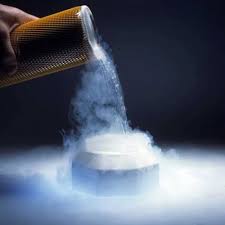
Liquid nitrogen is extremely cold (about -196 degrees Celsius). It is used to flash-freeze foods such as ice cream, fruits, vegetables, and meats. Rapid freezing creates smaller ice crystals, which damage food tissues less than slow freezing. The result is better texture and quality. Liquid nitrogen is also used to transport frozen biological samples such as vaccines, sperm, eggs, and embryos.
In Packaging
Nitrogen gas is pumped into food packaging to remove oxygen. Without oxygen, foods stay fresh longer because the oxygen that causes spoilage and oxidation is absent. Potato chip bags, coffee bags, and many other sealed food packages are filled with nitrogen, not air. That is why the bag feels puffy even though it has little air inside.
In Tires
Many car tires are filled with nitrogen instead of regular air. Nitrogen molecules are larger than oxygen molecules, so they leak out of tires more slowly. Nitrogen also does not contain moisture, so tire pressure changes less with temperature. Race cars, aircraft, and heavy trucks often use nitrogen-filled tires.
In Medicine
Nitrous oxide (N₂O), also known as laughing gas, is used as an anesthetic and pain reliever in dentistry and minor surgeries. Patients inhale a mixture of nitrous oxide and oxygen to feel relaxed and pain-free. Liquid nitrogen is used in dermatology to freeze and remove warts, skin tags, and pre-cancerous skin lesions. This process is called cryotherapy.
In Industry
Large amounts of nitrogen are used as a blanketing gas to prevent unwanted chemical reactions. For example, during the manufacture of electronics, nitrogen displaces oxygen to prevent oxidation of delicate components. Nitrogen is also used in steelmaking, oil refining, and the production of ammonia.
In Ammonia and Explosives
Ammonia (NH₃) is one of the most important industrial chemicals. It is made by combining nitrogen and hydrogen under high pressure and temperature using the Haber-Bosch process. Ammonia is used to make fertilizers, cleaning products, and many other chemicals. Nitric acid (HNO₃), another nitrogen compound, is used to make explosives such as TNT, nitroglycerin, and ammonium nitrate-based explosives.
Interesting Facts About Nitrogen
- Despite making up 78 percent of the air, nitrogen was not discovered until 1772. The reason is that it is completely unreactive and invisible. Early chemists could remove oxygen and carbon dioxide from air samples, but a large, inert remainder stayed behind. Daniel Rutherford, a Scottish physician, is usually credited with the discovery.
- Liquid nitrogen is so cold that it can freeze human tissue instantly on contact. Protective gloves and face shields are required when handling it. Even brief exposure can cause severe frostbite and permanent tissue damage.
- A small amount of liquid nitrogen expands to about 700 times its volume as it turns back into gas. That is why liquid nitrogen is stored in special vacuum-insulated containers with pressure relief valves. If stored in a sealed container, the pressure would build until the container explodes.
- Some cocktail bars serve drinks made with liquid nitrogen to create dramatic clouds of vapor. However, drinking liquid nitrogen or eating foods directly out of liquid nitrogen is extremely dangerous. Several people have suffered severe internal injuries or had their stomachs removed after drinking liquid nitrogen cocktails.
- The Haber-Bosch process for making ammonia from nitrogen and hydrogen is one of the most important inventions in human history. It was developed in the early 1900s by Fritz Haber and Carl Bosch. Before this process, the world depended on limited natural sources of nitrogen (bird droppings and saltpeter mines) for fertilizer. The Haber-Bosch process now produces over 170 million tons of ammonia per year, supporting about half the world’s population by enabling modern agriculture.
- Nitrogen is not poisonous, but breathing pure nitrogen causes rapid loss of consciousness and death within minutes. This is because the body needs oxygen. The nitrogen dilutes the oxygen to dangerously low levels. Workplace accidents involving nitrogen asphyxiation have killed many workers who entered tanks or confined spaces filled with nitrogen.
- The Earth’s atmosphere is about 78 percent nitrogen, but the atmospheres of Mars and Venus are less than 4 percent nitrogen. Titan, Saturn’s largest moon, has an atmosphere that is 98 percent nitrogen, making it the only other body in the solar system with a thick, nitrogen-dominated atmosphere.
- Nitrogen is a key component of amino acids, which are the building blocks of proteins. Every protein in your body contains nitrogen. Without nitrogen, there would be no enzymes, no muscles, no hair, no fingernails, and no connective tissue.
- Nitrogen compounds such as nitrates and nitrites are used as preservatives in processed meats like bacon, ham, hot dogs, and salami. They prevent the growth of dangerous bacteria such as Clostridium botulinum, which causes botulism. However, some studies have linked high consumption of nitrite-preserved meats to certain cancers.
- Most nitrogen-fixing (the process of turning inert N₂ gas into reactive nitrogen compounds) is done by bacteria. Some plants, such as beans, peas, clover, and soybeans, have symbiotic relationships with nitrogen-fixing bacteria that live in nodules on their roots. These plants enrich the soil with nitrogen. Farmers often plant these “cover crops” to restore soil fertility naturally.
- Lightning fixes nitrogen naturally. The immense energy of a lightning bolt breaks the strong triple bond in N₂ molecules, allowing nitrogen to combine with oxygen to form nitrogen oxides. These dissolve in rainwater to form nitrates that fertilize the soil. This natural process adds about ten million tons of fixed nitrogen to Earth’s soils each year.
- The nitrogen cycle is the process by which nitrogen moves through the environment. It involves nitrogen fixation (converting N₂ to ammonia), nitrification (converting ammonia to nitrates), assimilation (plants taking up nitrates), ammonification (decomposers returning nitrogen to soil), and denitrification (bacteria converting nitrates back to N₂ gas). Human activity has doubled the amount of fixed nitrogen entering the global nitrogen cycle, largely through fertilizer production.
- The blue color of the sky is partly due to nitrogen. Nitrogen molecules scatter blue light more than red light through Rayleigh scattering. Other gases also contribute, but nitrogen is the main gas in the atmosphere.
- Nitrogen-doped diamonds have a yellow or brownish color. Most natural diamonds contain small amounts of nitrogen impurities. In fact, the presence of nitrogen is so common that perfectly colorless diamonds (type IIa, with no nitrogen) are extremely rare and valuable.
- The largest use of nitrogen gas (not liquid) is in the electronics industry. Nitrogen is used as a blanketing gas during the manufacture of semiconductors, liquid crystal displays, and solar cells. The next largest use is in oil and gas extraction, where nitrogen is pumped into oil wells to increase pressure and force more oil to the surface.
A Safety Note
Nitrogen gas is not toxic, but it is an asphyxiant. It displaces oxygen in enclosed spaces, leading to suffocation without any warning. The body does not sense oxygen deficiency; you simply become drowsy, lose consciousness, and die. Death can occur when oxygen levels fall below about 10 percent, even if the rest of the gas is harmless nitrogen. Never enter a tank, pit, or room that has been filled with nitrogen without proper training and safety equipment. Liquid nitrogen causes severe cold burns (frostbite) on contact with skin and can damage eyes permanently. Always wear protective gloves, safety glasses, and closed-toe shoes when handling liquid nitrogen.
Summary in One Sentence
Nitrogen makes up most of the air we breathe, is the most important nutrient for crops, preserves food, freezes warts, and enables modern agriculture through the Haber-Bosch process.
For Science Lovers (Quick Reference)
- Symbol: N
- Atomic number: 7
- Atomic mass: approximately 14.007 u
- Electron configuration: 1s² 2s² 2p³
- Melting point: -210.0 degrees Celsius
- Boiling point: -195.8 degrees Celsius
- Density (gas at 0°C): 1.251 grams per liter (slightly lighter than air at 1.293 g/L)
- Density (liquid at boiling point): 0.807 grams per milliliter (just under water’s density)
- Main isotopes: Nitrogen-14 (about 99.634 percent natural abundance, stable), Nitrogen-15 (about 0.366 percent natural abundance, stable)
- Molecular form: Dinitrogen (N₂) with a triple bond length of 109.76 picometers
Leave a Reply