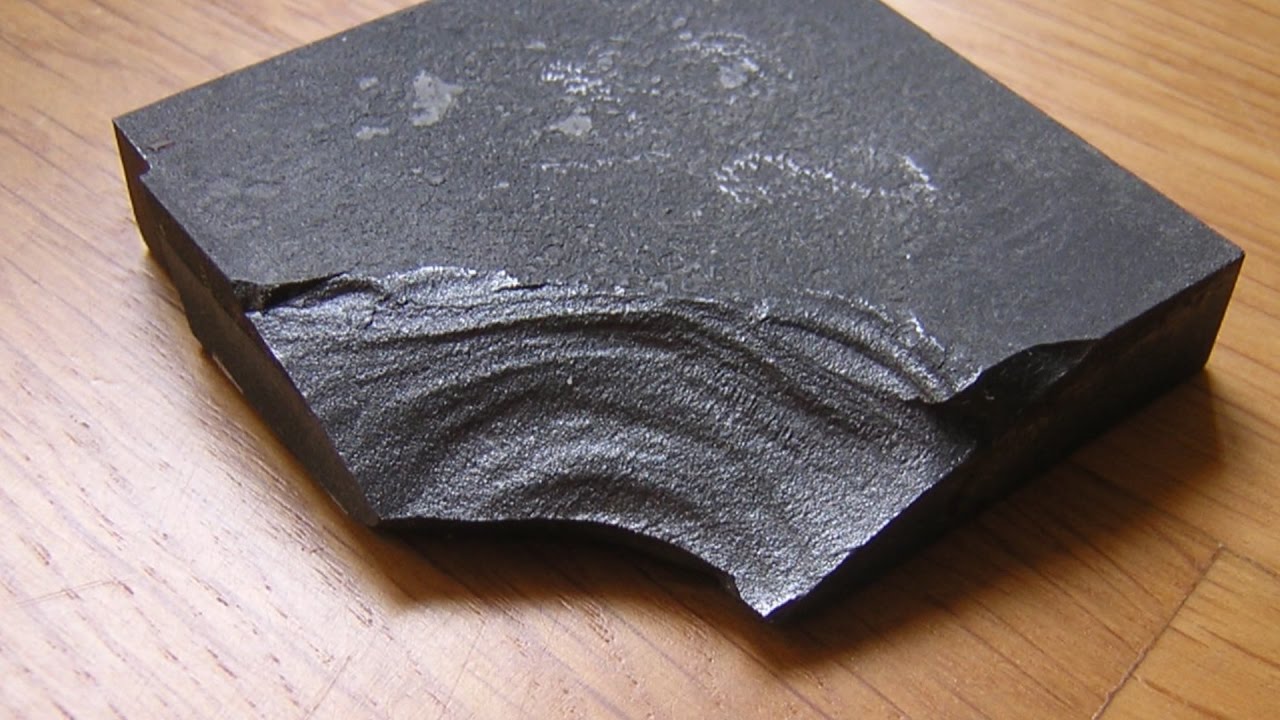
What Is Boron?
Boron is the fifth element on the periodic table (atomic number 5). It is a metalloid, meaning it has properties between those of metals and nonmetals. Boron is relatively rare in nature and is never found in pure form. Instead, it exists in compounds such as borax and boric acid.
Pure boron can be produced in two forms: amorphous boron (a dark brown powder) and crystalline boron (black, hard, and shiny). Crystalline boron is one of the hardest materials known, second only to diamond and cubic boron nitride among common substances.
Interesting fact: Boron is an essential nutrient for plants. Without boron, many crops cannot grow or reproduce properly. However, the difference between boron deficiency and boron toxicity in plants is very small.
Key Properties
| Property | What It Means |
|---|---|
| Color | Dark brown (amorphous) or black (crystalline) |
| State at room temperature | Solid |
| Classification | Metalloid |
| Hardness | Extremely hard (crystalline form) |
| Electrical conductivity | Very low (acts as an insulator at room temperature) |
| Melting point | Very high (2076 degrees Celsius) |
Where Do We Find Boron in Daily Life?
Boron compounds appear in many household and industrial products.
In Fiberglass Insulation
Fiberglass, the pink or yellow fluffy insulation in building attics and walls, contains boron compounds. Boron helps the glass fibers form properly and adds fire resistance. Most fiberglass home insulation is about 5 to 10 percent boron trioxide.
In Heat-Resistant Glass
Borosilicate glass, which contains boron trioxide, resists thermal shock. This glass does not crack when suddenly heated or cooled. Common examples include laboratory beakers and test tubes, glass baking dishes (such as Pyrex), some high-end cookware, and certain telescope mirrors. Borosilicate glass expands only one-third as much as ordinary soda-lime glass when heated.
In Detergents and Cleaning Products
Sodium perborate is a boron compound used as a bleach in laundry detergents. It releases hydrogen peroxide in hot water, whitening clothes without damaging fabrics. Many powdered laundry detergents and stain removers contain boron compounds.
In Agriculture
Boron is a micronutrient essential for plant growth. It helps plants move sugars through their tissues, develop flowers and fruits, and form cell walls. Boron fertilizers are applied to crops such as apples, grapes, broccoli, cotton, and sunflowers. Boron deficiency causes hollow stems, cracked fruits, and poor seed development.
In Wood Preservatives
Boron compounds are used to treat lumber against termites, carpenter ants, and wood-decaying fungi. Borate-treated wood is common in house frames, wooden fences, and utility poles. Unlike some older wood preservatives, borates are relatively low in toxicity to humans and pets.
In Fire Retardants
Boric acid and other boron compounds are sprayed on cellulose insulation, cotton batting, and some fabrics to make them flame-resistant. When heated, boron compounds release water vapor, which cools the material and slows the spread of fire.
In Eye Washes and Antiseptics
Dilute boric acid solutions are used in eye washes, contact lens cleaning solutions, and mild antiseptics. Boric acid is mildly antibacterial and antifungal, making it useful for treating minor skin irritations and ear infections (though its medical use has declined in recent decades).
In Nuclear Reactors
Boron is an excellent neutron absorber. Control rods in nuclear reactors often contain boron carbide or are made of boron-containing steel. The boron captures excess neutrons, helping to control the rate of the nuclear chain reaction. During the Chernobyl disaster, firefighters dropped boron and dolomite onto the burning reactor core to absorb neutrons and stop the reaction.
In High-Performance Materials
Boron fibers are used in some aerospace composites because they are extremely stiff and lightweight. Boron nitride, a compound of boron and nitrogen, is as hard as diamond and is used in industrial cutting tools. Boron carbide is used in tank armor and bulletproof vests.
Interesting Facts About Boron
- Boron was discovered in 1808 by Sir Humphry Davy in England and independently by Joseph Louis Gay-Lussac and Louis Jacques Thénard in France. All three produced boron by reacting boric acid with potassium metal.
- The name boron comes from “borax,” the mineral from which it was first isolated. Borax itself comes from the Persian word “burah,” meaning white.
- Pure crystalline boron is the second hardest element after carbon (diamond). It is so hard that it can scratch nearly any other material. However, it is also brittle and shatters rather than deforming.
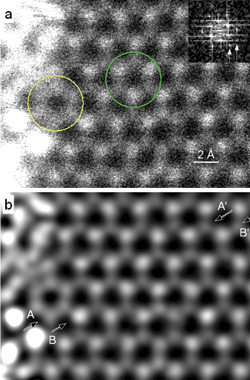
- Boron has an unusual atomic structure. Unlike most elements that form simple metallic or covalent bonds, boron forms complex three-dimensional networks with missing electrons. These “electron-deficient” structures are still not fully understood by scientists.
- The Death Valley region of California contains large deposits of borax. In the late 1800s, refined borax was hauled out of the desert by twenty-mule teams, leading to the famous “20 Mule Team Borax” brand that still exists today.
- Boron is relatively rare in the universe and in Earth’s crust. It is not produced in significant amounts by normal stellar fusion. Instead, most boron is formed by cosmic ray spallation, the same process that creates beryllium and lithium.
- Some rocket fuels have used boron compounds to increase energy output. Boron burns with an intense green flame and releases more heat per kilogram than most conventional fuels. However, the combustion products are sticky solids that clog engines, limiting practical use.
- Boron nitride can be made into a form called “white graphite” because it has a similar layered structure to graphite. This form is soft and slippery and is used as a high-temperature lubricant. At very high temperatures and pressures, boron nitride transforms into cubic boron nitride, which is nearly as hard as diamond but resists heat better.
- Boron is used in some semiconductor devices because it is a p-type dopant. Adding a small amount of boron to pure silicon creates “holes” in the crystal structure, allowing electrical current to flow differently than with other dopants. Almost all computer chips contain tiny amounts of boron.
- Boric acid is a common insecticide against ants, cockroaches, and fleas. It damages their exoskeletons and digestive systems. Many “ant bait” products contain boric acid mixed with sugar water. Ants carry the mixture back to their nests, poisoning the entire colony over several days.
- Boron is the only element besides carbon that can form stable, extended networks of covalently bonded atoms in multiple dimensions. This is why boron forms such complex and unusual crystal structures.
- Seawater contains about 4.5 milligrams of boron per liter. That is a low concentration, but because the oceans are enormous, the total amount of boron dissolved in seawater is massive — around 4.5 trillion metric tons.
- In the 1950s and 1960s, a class of boron-hydrogen compounds called boranes was investigated as potential high-energy fuels for supersonic aircraft. The program was canceled when boranes proved too toxic, too unstable, and produced solid exhaust that damaged engines.
A Safety Note
Boron compounds are generally of low toxicity to humans. Boric acid and borax are used in eye washes and laundry detergents. However, eating large amounts of boron compounds can cause nausea, vomiting, diarrhea, and kidney damage. The difference between a safe and dangerous dose for humans is quite large compared to many other elements, but borates should still be kept away from children and pets. Ingesting a few grams of boric acid can be fatal to infants or small animals.
Summary in One Sentence
Boron is a hard, heat-resistant metalloid that strengthens glass, protects wood, feeds plants, controls nuclear reactors, and appears in everything from laundry detergent to bulletproof vests.
For Science Lovers (Quick Reference)
- Symbol: B
- Atomic number: 5
- Atomic mass: approximately 10.81 u
- Electron configuration: 1s² 2s² 2p¹
- Melting point: 2076 degrees Celsius
- Boiling point: 3927 degrees Celsius
- Density (crystalline): 2.34 grams per cubic centimeter
- Density (amorphous): 2.37 grams per cubic centimeter
- Main isotopes: Boron-10 (about 19.9 percent natural abundance, neutron-absorbing), Boron-11 (about 80.1 percent natural abundance, stable)
- Crystal structure: Rhombohedral (complex)
- Mohs hardness (crystalline): Approximately 9.5 (diamond is 10)
Leave a Reply